

808nm Laser: How to Choose the Perfect One for Your Application
2026-07-22
When it comes to precision and power in laser technology, the 808nm wavelength stands out as a workhorse across industries—from medical therapies to industrial alignment and beyond. But with so many options on the market, how do you pinpoint the right one for your specific needs? Whether you're seeking the ideal balance of output power, beam quality, or package design, the decision can feel overwhelming. That's where GUANG TAI comes in, offering a range of 808nm laser solutions engineered to meet diverse application demands. In this post, we'll break down the key factors you need to consider, helping you make a confident choice without the guesswork.
Understanding the Unique Properties of 808nm Wavelength
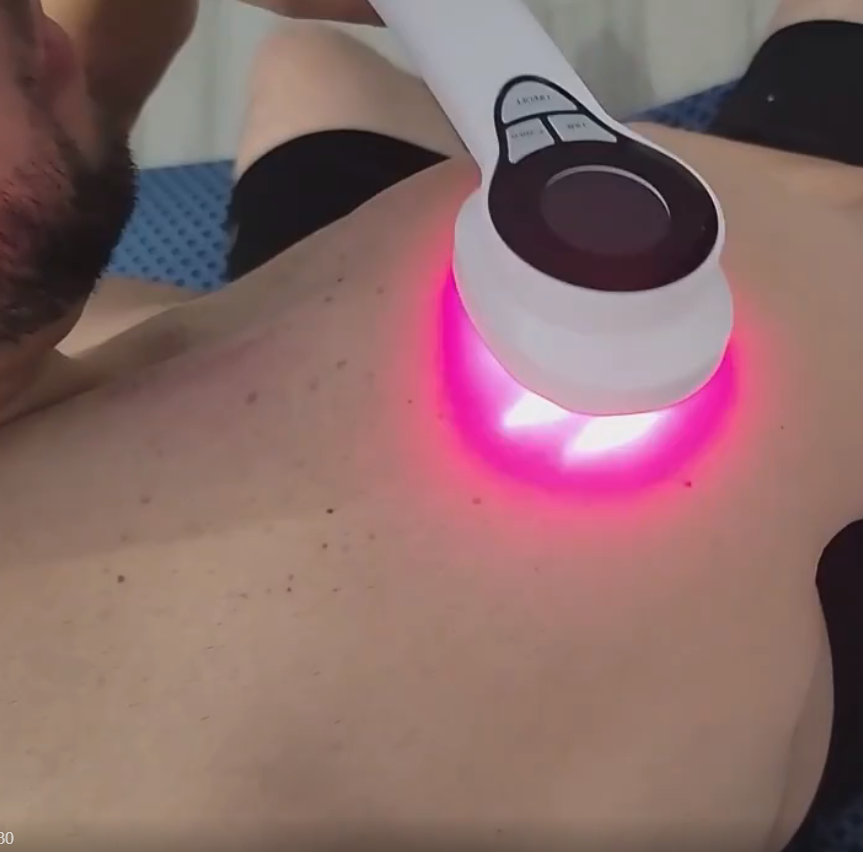
808nm wavelength sits in a sweet spot of the near-infrared spectrum, offering a balance between absorption and scattering within biological tissues. Unlike shorter wavelengths that are heavily absorbed by melanin and hemoglobin, or longer ones that scatter too widely, 808nm penetrates deeply enough to reach targeted chromophores while avoiding excessive surface damage. This characteristic makes it particularly useful in applications where controlled energy delivery to deeper layers is key, such as laser hair removal and skin rejuvenation treatments.
The interaction of 808nm light with water and lipids is another defining trait. While it’s not as strongly absorbed by water as, say, 980nm or 1064nm, it still triggers thermal effects that can remodel collagen and stimulate cellular activity. This water “window” allows for better tissue penetration, and when combined with low-level laser therapy (LLLT), 808nm has shown promise in accelerating wound healing and reducing inflammation. Its moderate absorption by hemoglobin also makes it viable for vascular treatments, though not as specifically as other wavelengths.
In industrial settings, 808nm’s properties underpin high-power diode lasers used for cutting and welding metals. The wavelength offers good absorption by common materials with minimal beam divergence, leading to precise, clean cuts. It’s a workhorse wavelength that, despite being less discussed than 1064nm Nd:YAG, provides a unique combination of efficiency, safety, and depth control for both medical and manufacturing applications.
Key Factors to Evaluate Before Making a Purchase
When you're on the verge of buying something, it's easy to get swept up in the moment. Start by stepping back and asking yourself what problem or genuine need this item solves. Is it filling a gap in your life, or just adding clutter? Think about how often you'll actually use it—be brutally honest. A fleeting desire rarely justifies a lasting dent in your wallet.
Next, turn your attention to what others have experienced. Instead of skimming star ratings, read a mix of reviews, especially the ones that mention long-term use or specific drawbacks. Look for comments from people whose needs mirror your own. If a product shines in ideal conditions but falters in daily reality, that's a red flag. Also, compare it with alternatives; sometimes a less flashy option outperforms where it counts.
Finally, weigh the true cost beyond the price tag. Consider maintenance, replacement parts, or subscription fees that might creep up. Factor in the lifespan—spending more upfront on something built to last can be smarter than buying cheaper versions repeatedly. And don't overlook the return policy or warranty; a flexible guarantee often signals a company's confidence in what they are selling.
Matching Laser Specifications to Your Intended Use
Figuring out the right laser isn't just about chasing the highest power or the flashiest specs. It starts with a clear look at what you actually need the laser to do. Are you cutting through thick steel every day, or mostly engraving delicate wood and acrylic? Different materials and tasks demand different wavelengths, power levels, and beam qualities. A CO2 laser might breeze through organic materials but struggle with metals, while a fiber laser can engrave metal effortlessly but might burn right through some plastics. Matching these basics to your daily workflow saves you from buying a machine that's either overkill or disappointingly underpowered.
Beyond just power, pay attention to details like spot size, pulse frequency, and cooling requirements. A tiny spot size can give you incredibly fine engraving detail, but it also means slower coverage on large-area marking jobs. High pulse frequency is great for smooth cuts in certain materials, but it can generate excess heat that warps thin sheets. Even the cooling system matters more than you might think—a water-cooled tube might offer more stable long-run performance than an air-cooled one, but it adds complexity. Think about your typical batch sizes and how long you run the machine; these factors nudge you toward specs that keep your production smooth instead of causing constant pauses.
Don't forget to factor in the software and support ecosystem. A laser's physical specs only shine if you can control it properly. Check whether the included software handles your file formats comfortably and if it offers enough control over speed, power ramping, and layering. If you plan to do a lot of one-off custom work, you'll want intuitive alignment tools and a reliable autofocus. And if something goes wrong, responsive support and available replacement parts can be the difference between a day of downtime and a week of frustration. A well-spec'd machine with poor control or no backup is just an expensive paperweight.
Comparing Diode Types and Their Performance
When you start looking into diodes, you quickly realize there’s more than just the standard silicon rectifier. Each type has its own niche, defined by how it handles current, voltage, and switching speed. A simple 1N4007 can block up to 1000V and pass an amp, which is fine for basic power supplies, but throw it into a high-frequency circuit and you’ll run into trouble because its recovery time is too slow.
That’s where Schottky diodes step in, with their low forward voltage drop and lightning-fast switching. They hardly waste any power during turn-off, making them ideal for switch-mode power supplies and reverse-polarity protection. On the downside, they leak more current at high temperatures and usually have lower breakdown voltages, so they’re not a universal replacement for silicon junction diodes.
If you need precision reference voltages, Zener diodes become the go-to, but their performance varies with current and temperature. For really demanding applications, you might explore TVS diodes for surge suppression or even exotic silicon carbide types that thrive at high voltages and temperatures. The choice always comes down to which compromises you can live with.
Safety Considerations and Regulatory Compliance
Embedding safety from the earliest design phase isn't just a best practice—it's a necessity. We run thorough risk assessments for every component, anticipating potential failure points before they become real issues. The goal is simple: eliminate hazards rather than simply guarding against them. This means selecting inherently safe materials, designing fail-safe mechanisms, and ensuring that protective systems can’t be easily bypassed by an operator in a rush. Each decision gets measured against both internal safety benchmarks and the strictest international requirements we can identify.
Regulatory compliance is rarely a one-time achievement. Standards evolve, interpretations shift, and new testing protocols emerge with little warning. Our team monitors updates to key directives in every market we serve, often participating in industry working groups to anticipate changes. Documentation matters as much as the hardware itself—technical files, conformity assessments, and traceability records need to withstand scrutiny from notified bodies and inspectors. A missed detail in a material certification or a vague risk assessment entry can stall market access for months, so we hold ourselves to a level of rigor that goes beyond ticking boxes.
Real-World Performance Insights from Industry Experts
In our daily grind, we’ve learned that raw theory only gets you so far. After years of tuning live systems under real traffic spikes, patterns begin to surface—those subtle knobs and levers that never make it into the glossy case studies. One senior engineer at a large e‑commerce platform once whispered to me, “The biggest wins came not from a single magical config change, but from gradually reshaping how the team thinks about latency.” That stuck. It’s about weaving observability into the workflow so tightly that performance regressions feel like a physical pain.
In a recent roundtable, a site reliability lead from a streaming service shared how they slashed median load times by reframing the definition of “done.” Instead of shipping features that merely passed unit tests, every new endpoint had to serve a 95th‑percentile response under 200 ms in a shadow environment. It was painful at first, but the discipline eventually caught on. Developers started profiling database queries as naturally as they linted code. The real insight wasn’t the tooling, but the cultural shift—performance became a shared responsibility, not a gatekeeper’s checklist.
Another candid story came from a fintech architect who admitted they only won back trust after a catastrophic outage. Their post‑mortem revealed not a single root cause but a cascade of assumptions: a third‑party API was silently slower during market hours, a connection pool misconfiguration hid the true backlog, and a monitoring dash was four minutes behind reality. “We learned that synthetic benchmarks are dangerous comfort blankets,” they reflected. The fix wasn’t a new tool, but a ruthless habit of injecting real‑world chaos and sharing findings across silos. These are the messy, human‑centered lessons that stick with you long after the alerts stop buzzing.
FAQ
The 808nm wavelength hits a sweet spot for many applications because it's well-absorbed by melanin and hemoglobin, yet penetrates deeper than shorter visible wavelengths. It's often the core pump source for solid-state lasers like Nd:YAG, making it a workhorse in both medical and industrial settings. Unlike visible red or green lasers, it's invisible to the naked eye, which adds safety considerations but also lets it work behind the scenes in devices where no visible beam is wanted.
Start by thinking about what you're actually trying to achieve. For a low-level therapy device, you might only need a few hundred milliwatts. If you're cutting or engraving, you'll likely need several watts or more. Consider the material and the speed you need—higher power means faster processing, but it also adds cost and heat management headaches. It's often smarter to test with a lower power module first if you're unsure.
One big mistake is overlooking thermal management—these diodes are efficient but still generate significant heat, and their wavelength drifts with temperature. Another is ignoring proper eye protection; since the beam is invisible, it's easy to be careless. Also, people sometimes forget that the beam quality matters just as much as raw power for focusing to a tight spot, so check the emitter size and divergence specs carefully.
It depends on your experience and timeline. A bare diode gives you full control but requires precision current driving, cooling, and optics alignment. A module comes with a driver, housing, and often collimation, so you can just mount it and go. If you're prototyping or don't have a strong electronics background, a module saves weeks of tinkering. For high-volume manufacturing, the bare diode might be worth the extra engineering effort.
Beyond power, look at the wavelength tolerance—a few nanometers shift can matter in some absorption-sensitive applications. Beam divergence and emitter size dictate how tightly you can focus the spot. Lifetime ratings (MTTF) vary widely between brands. Also check the threshold current and slope efficiency, because they tell you how hard the diode needs to be driven and how clean the light output is as you ramp up.
Derating is your friend—run it below the maximum rated current and keep the temperature stable. Buy from suppliers who provide detailed burn-in data or long-term aging curves. Look for hermetically sealed packages if dust or moisture is a concern. In industrial setups, gentle start-up ramps and overcurrent protection can prevent sudden failures. Real-world reliability often comes down to the driver circuit design as much as the diode itself.
Fiber coupling adds cost and some power loss, but it gives you a round, uniform beam that's much easier to deliver to the target. If your setup requires moving the beam over distances or accessing tight spaces, it's almost a necessity. For simple direct illumination right next to the diode, a free-space setup works fine. Think about whether you'll fight with alignment over the instrument's lifetime—fiber often pays for itself in reduced maintenance.
Conclusion
Selecting an 808nm laser is a nuanced process that begins with grasping why this specific wavelength stands out. Its near-infrared emission penetrates tissue deeply with minimal scattering, making it invaluable in medical therapies like hair removal and skin rejuvenation, as well as in industrial pumping for solid-state lasers. Before committing, you must scrutinize core parameters: power output and stability dictate treatment efficacy and process consistency, beam quality affects precision in micromachining, and thermal management ensures longevity. Equally critical is questioning the diode type—single emitters offer simplicity, while bars and stacks provide higher power densities—and weighing their trade-offs in efficiency and lifetime. Overlooking these fundamentals often leads to mismatched performance and premature failure, so thorough evaluation of specifications against your intended application is the bedrock of a sound decision.
Beyond the technical specs, real-world behavior of the laser is shaped by environmental and operational factors that spec sheets rarely capture. Feedback from practitioners highlights how ambient temperature swings can shift wavelength and reduce efficacy, underscoring the need for robust cooling in your setup. Safety cannot be an afterthought: compliance with IEC 60825 standards, proper eyewear, and enclosures are mandatory given the invisible beam's retinal hazard. Engaging with industry peers reveals that the most successful deployments are those where theoretical specs align with practical conditions—where a laser's rated average power is balanced against actual duty cycles and maintenance intervals. Ultimately, the perfect 808nm laser isn't just a component; it's a tailored solution that harmonizes physics, engineering, and real-world demands, chosen through a blend of diligent research and hands-on validation.
Contact Us
Contact Person: Leon Yi
Email: [email protected]
Tel/WhatsApp: +86 17363316873
Website: https://zzgt.en.alibaba.com/