

Best HDPE Geomembrane: Essential Guide to High-Density Polyethylene Liners
2026-08-06
When it comes to reliable containment solutions, high-density polyethylene (HDPE) geomembranes have become the industry standard across landfills, mining, and water management projects. But not all liners are created equal—selecting the best HDPE geomembrane can mean the difference between a lasting, leak-free installation and costly failures down the road. That’s where expert guidance and quality manufacturing matter. As a trusted name in the field, WEN FENG STONE brings decades of expertise to help you navigate material specifications, installation best practices, and long-term performance. In this guide, we’ll break down everything you need to know about HDPE liners, so you can make informed decisions with confidence.
What actually makes these liners so tough?
The secret often lies in the material blend itself. These liners combine high-molecular-weight polyethylene fibers with a carefully engineered cross-weave pattern. It’s not just about thickness—the fiber density and the way the layers are bonded create a surface that resists cutting, tearing, and abrasion from the inside out. You could scrape a sharp tool against the wall repeatedly and barely leave a mark.
Then there’s the curing process. Instead of a quick bake, these liners undergo a staged thermal treatment that relieves internal stresses and aligns the polymer chains more uniformly. The result is a consistent toughness that doesn’t crack under extreme temperature swings or constant heavy loads. It’s the sort of resilience you notice only when you compare it side by side with a standard drop-in liner that has warped after a week.
Finally, the surface finish plays a bigger role than most realize. A slight texturing—not enough to trap debris, but just enough to break up the sheer plane—distributes impact energy more evenly. It’s the same principle as dimpled steel, scaled down to a nearly invisible level. That’s why dents and gouges rarely propagate into full fractures, even after years of punishing use in dump trucks or quarry equipment.
Where HDPE geomembranes quietly do their best work
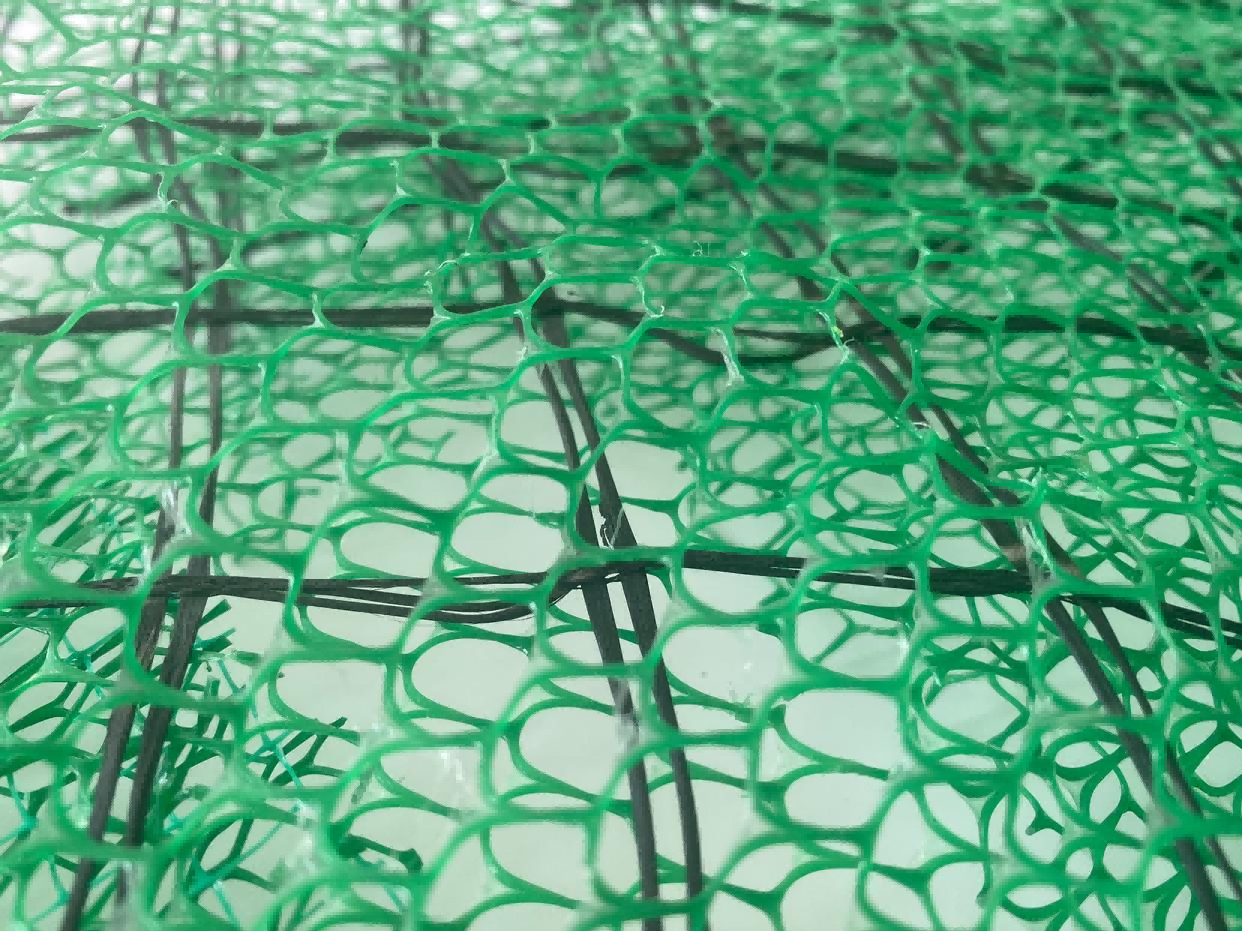
Beneath landfills that stretch for acres, these liners trap leachate without fanfare, turning potential groundwater disasters into non-events. In mining operations, they cradle toxic tailings as dutifully as a parent shields a child, decade after decade, while operators rarely glance at them. Reservoirs and canals trust their impermeable backbone to hold water in parched regions, needing almost no maintenance beyond a casual check. They’re the unseen guardians, doing their job so seamlessly that their presence becomes an afterthought.
You’ll also find them beneath the foundations of tunnels, where they stand between concrete and corrosive soil chemistries, never demanding recognition. In aquaculture, they form pond liners that keep water chemistry stable for shrimp and fish, boosting yields while staying completely out of sight. Even in decorative ponds and golf course water features, they prevent seepage so discreetly that visitors assume the water just naturally stays put. Wherever containment matters and attention is scarce, HDPE geomembranes settle into their role—competent, silent, and deeply underestimated.
The overlooked details that make or break an installation
You can have the best gear in the world, but if a single cable isn’t dressed properly, the whole space feels off. It’s the small things—the angle of a bracket, the way a seam lines up with an architectural feature, or how a panel sits flush against an uneven wall—that separate a polished job from a rushed one. Most people won’t consciously notice these details, but they’ll feel the difference. A millimeter too high and the screen looks out of balance; a zip tie left uncut and it whispers carelessness.
And then there’s the sequencing of tasks itself. Installers who rush to mount devices before checking the substructure or verifying cable paths often end up with headaches that could’ve been avoided by spending an extra five minutes with a level and a stud finder. The overlooked part isn’t any one specific thing—it’s the discipline to pause and consider how every element interacts. When you ignore that, the result is a system that works but never truly integrates.
Clients remember the experience, not the spec sheet. A crooked logo on a speaker grille, a visible fingerprint on a lens, or a slight tilt in a projector can erode confidence faster than any malfunction. The irony is that these details are usually the easiest to fix—you just have to care enough to see them. And that’s what makes an installation last: not the technology, but the quiet perfectionism that makes it disappear into the room.
Picking the right liner without overpaying or underspecing
Choosing a liner often feels like a balancing act—spend too much and you’re wasting budget, go too cheap and you’ll be replacing it sooner than you’d like. The sweet spot lies in matching the liner material and thickness to the actual demands of your application, not just the worst-case scenario. For instance, a high-density polyethylene liner might be overkill for a secondary containment area that rarely sees chemical exposure, while a reinforced polypropylene could be essential for a primary tank holding corrosive fluids at elevated temperatures.
It’s easy to fall into the trap of believing that thicker always means better, but that’s not necessarily true. A thinner, properly engineered liner with strong chemical resistance can outperform a thicker, lower-grade alternative. Think about flexibility, puncture resistance, and how the liner reacts to thermal cycling—these factors often matter more than sheer mil thickness. Consulting with manufacturers who offer technical data specific to your operating conditions can reveal that a medium-duty liner is perfectly capable, saving you from paying a premium for unnecessary toughness.
Another way to avoid overspending is to examine installation and maintenance costs upfront. Some liners require specialized welding or surface preparation that drives up the total project cost, while others are designed for easy field installation with simple tools. By factoring in these hidden expenses and the expected lifespan under your specific chemical and environmental stressors, you can make a decision that optimizes both performance and long-term value. The goal is a liner that fits the job so well you never have to think about it again—at least until it’s time for a planned replacement years down the road.
How long do they really last? Breaking down the data
Real-world lifespan rarely matches the optimistic numbers on the box. While a mattress warranty often stretches 10 years or more, the actual comfort and support you feel can fade much sooner. Memory foam, for example, tends to soften and develop body impressions between 5 and 7 years, especially if it's lower density. Innerspring models, on the other hand, might lose coil resilience and start squeaking around the same time, though premium ones can hold up a bit longer. What’s telling is that most user replacements happen well before year 8, not because the bed has collapsed entirely, but because sleep quality suffers. The data suggests that the happy window for peak performance is closer to 6 to 8 years, after which you’re often just tolerating a slow decline.
There's a noticeable gap between expectation and reality when we look at how often people actually buy new mattresses. Surveys consistently show that the average replacement cycle sits between 7 and 10 years, but that's heavily skewed by folks sleeping on the same sagging mattress for over a decade. Digging deeper, nearly 30% of owners report wishing they'd swapped theirs out sooner, citing back pain or restless nights. Latex mattresses are a bit of an outlier here—they routinely last 12 to 15 years with minimal sag, thanks to the natural rubber's resilience. But for the vast middle ground of hybrid and foam beds, the “replace every 8 years” rule that many experts recommend really holds up under scrutiny. It’s less about catastrophic failure and more about the steady erosion of pressure relief and spinal alignment.
Mistakes even experienced contractors repeat with HDPE
Even after decades on the job, seasoned contractors sometimes slip into the same trap with HDPE: assuming that because the material is tough and flexible, joint preparation can be a little more forgiving. It’s not. HDPE demands a level of surface cleanliness during fusion that rivals surgical standards. A tiny smudge of dirt, a hint of moisture, or a fingerprint on the pipe ends can create a fusion joint that looks flawless on the outside but hides a weak, leak-prone seam inside. Many veterans have learned this the hard way, watching a perfectly laid pipeline fail a pressure test because someone wiped the pipe with a rag that had been on the ground five minutes earlier.
Another repeated mistake is neglecting thermal expansion and contraction, especially in above-ground installations. HDPE’s expansion rate is significantly higher than metallic pipes, yet experienced crews often anchor it like they would steel, leading to buckling in summer or pulling apart in winter. The fix isn’t complicated—allow for movement with proper supports and expansion loops—but old habits die hard. Contractors who’ve spent years with rigid systems sometimes forget that HDPE needs room to breathe, and by the time the sun hits that black pipe, the snaking deformations become an expensive reminder.
Then there’s the stubborn tendency to override the fusion machine’s data logs. Modern equipment records every parameter: temperature, pressure, soak time. But a veteran operator who “knows this machine better than the manufacturer” might ignore a slight temperature dip or a pressure fluctuation, convinced their gut feeling beats the sensor. More often than not, that overconfidence leads to a joint that passes the initial visual check but fails months or years later under stress. The irony is that HDPE fusion is incredibly reliable when the rules are followed to the letter—but it punishes corner-cutting without mercy, no matter how many miles of pipe you’ve laid before.
FAQ
An HDPE geomembrane is a synthetic liner made from high-density polyethylene, known for its exceptional chemical resistance, UV stability, and durability. It's often considered the best option because it provides long-term containment, withstands harsh environmental conditions, and has a proven track record in critical applications like landfills, mining, and water storage.
Thickness directly influences puncture resistance, tensile strength, and longevity. A thicker liner, say 60 mil or 80 mil, can handle more stress, resist sharp objects better, and last longer in demanding environments. However, the right thickness depends on the specific project requirements, subgrade conditions, and the type of waste or liquid being contained.
Installation involves surface preparation, panel deployment, and then welding the seams using hot-wedge or extrusion techniques. It's critical to have a smooth, compacted subgrade free of sharp debris. Qualified technicians then place the panels, overlap them, and thermally bond the edges to create a monolithic barrier. Quality control measures like air pressure tests and vacuum box checks ensure every seam is leak-free.
HDPE offers superior chemical resistance and is less susceptible to degradation from UV light and weathering compared to PVC. It also has higher tensile strength and elongation properties than many alternatives, making it ideal for large-scale containment where reliability over decades is non-negotiable. Unlike EPDM, HDPE doesn't require adhesives for seaming, which can be a weak point in the system.
They're widely used in waste management for landfill caps and base liners, in mining for heap leach pads and tailings storage, and in agriculture for irrigation ponds and aquaculture. You'll also find them in secondary containment for chemical storage tanks, water treatment facilities, and even decorative ponds where a reliable waterproof barrier is essential.
Longevity comes from proper design, UV stabilization, and protection against physical damage. Regular inspections are key—check for signs of stress cracking, vegetation overgrowth, or animal intrusion. Covering the liner with soil or water helps shield it from direct sunlight and thermal expansion. Minor repairs should be done promptly by a certified technician to prevent small issues from becoming leaks.
Conclusion
High-density polyethylene geomembranes earn their reputation through a combination of dense polymer structure and exceptional chemical resistance. The secret to their toughness lies in the tightly packed molecular chains that resist punctures, tears, and environmental stress cracking, even under extreme temperatures. You’ll find them quietly performing in landfills, mining leach pads, wastewater ponds, and even aquaculture—anywhere a reliable barrier is non-negotiable. But real-world performance hinges on the details often overlooked: proper subgrade preparation, precise panel layout to minimize welding, and rigorous testing of every seam. Without these, even the best material becomes a liability.
Choosing the right liner means balancing thickness, surface texture, and lifetime cost—not just grabbing the cheapest or thickest option. Data from decades of field studies show properly installed HDPE liners can function beyond 30 years, but that assumes avoidance of common pitfalls. Experienced crews still repeat mistakes like rushing wedge welding on damp mornings, neglecting anchor trench backfill, or ignoring small wrinkles that concentrate stress. A smart specification isn’t about overpaying for unnecessary features; it’s about understanding where the loads and exposure actually peak and designing for those conditions. When the details are respected, HDPE offers a quiet, decades-long assurance that’s hard to match with other materials.
Contact Us
Contact Person: Jennifer LEE
Email: [email protected]
Tel/WhatsApp: 8618553418999
Website: https://vip.e-baixing.com/wenfengshitong