

Big Industrial Fans Supplier: Durable and Efficient Air Movement Solutions
2026-10-28
When it comes to keeping vast industrial spaces cool and well-ventilated, not all fans are created equal. At VINDUSFAN, we don't just move air—we engineer durable, energy-smart solutions that stand up to the toughest environments. Whether you're battling stifling heat on a factory floor or need consistent airflow in a warehouse, our big industrial fans deliver performance without the noise or maintenance headaches. In this post, we'll explore what sets our air movement systems apart and why choosing the right supplier can make all the difference.
What Actually Happens When Air Stops Moving in a Large Facility
In a large open space, still air quickly loses its ability to equalize temperature. Warm air rises toward the ceiling while cooler air sinks, creating distinct layers that occupants feel as cold feet and a stuffy head. Without regular circulation, the temperature difference between floor and ceiling can grow to surprising extremes, making the entire facility feel uneven and uncomfortable even when the thermostat reads a stable number.
The lack of movement also allows moisture and airborne particles to gather in pockets. Humidity from people, cleaning processes, or stored materials lingers instead of being diluted, which can lead to condensation on cool surfaces and a faint musty odor. Dust, volatile compounds from equipment, and even carbon dioxide from breathing accumulate in the occupied zone, reducing alertness and leaving the air feeling heavy and stale.
Perhaps most concerning is the way stagnation affects hygiene. In a large facility, pathogens expelled by a single person can remain suspended in one area for long periods, slowly spreading to nearby zones rather than being flushed out. This creates hotspots of contamination that are hard to detect until they cause symptoms. Restoring gentle, consistent airflow is not just about comfort; it breaks up these invisible reservoirs and keeps the entire volume of the building closer to a single, breathable condition.
Why Heavy-Duty Fan Blades Aren’t Just About Size
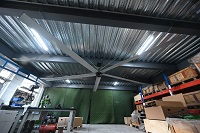
A larger blade diameter does not automatically translate to better air movement. What separates a high-performing heavy-duty fan from a noisy, energy-hungry unit is the geometry of each blade. The twist angle, chord width, and tip shape determine how much air gets pulled through at a given RPM, and even a 60-inch fan with poorly shaped blades can be outperformed by a well-designed 48-inch model.
Material selection plays an equally quiet but critical role. Heavy-duty does not mean simply bolting a thicker piece of steel onto the hub. Blades that are too rigid can transmit every vibration into the motor and mount, leading to premature bearing wear. Modern designs often pair an aluminum or composite core with a slight flex zone near the hub, allowing the blade to absorb load spikes without sacrificing long-term stiffness.
The real test comes down to where and how the fan runs. A blade shaped for a wide-open warehouse will struggle in a space with ducting, filters, or low ceilings where static pressure rises. Heavy-duty fans need to match their pitch and surface area to that resistance, not just to the square footage. Getting that match right means less noise, lower amp draw, and a motor that lasts years longer than one paired with the wrong "oversized" blade set.
How Airflow Patterns Change the Feel of a Whole Production Floor
Walk onto a production floor where the air barely moves and you sense it immediately—a heaviness that settles over machines and people alike. Stagnant pockets trap heat, fumes, and humidity in unpredictable zones, so one workstation might feel clammy while another catches a cold draft from a loading door. These uneven conditions aren't just comfort issues; they shift how workers perceive the entire space, making some areas feel neglected and others overworked.
When airflow is deliberately shaped—through properly placed supply diffusers, return grilles, and low-velocity fans—the whole floor takes on a different character. Air no longer lingers around welding stations or packing lines; it moves in a gentle, consistent wash that carries away airborne particles and evens out temperature gradients. Workers stop layering up and stripping down between zones, and that subtle shift changes the rhythm of the day. The floor feels more coherent, less like a patchwork of microclimates tied to whatever machine happens to be running nearby.
Over time, these airflow patterns influence more than physical comfort. A production floor with balanced ventilation feels cared for, and that sensation feeds into how people move through the space, how they approach quality checks, and even how they communicate across shifts. The air itself becomes part of the operational flow—not something you notice only when it is wrong, but a quiet structure that holds the entire floor together.
The Hidden Costs of Choosing a Fan Supplier Based on Price Alone
Low upfront quotes from fan suppliers often mask a chain of expenses that surface only after installation. Bearings wear out sooner, motors run hotter, and blades lose balance, triggering repeated service calls that erode any initial savings. Facilities managers end up juggling downtime and replacement parts, while the real cost per operating hour climbs well above what a mid-range supplier would have charged.
Energy efficiency is another silent casualty. Cheap fans frequently skip optimized impeller designs or use lower-grade laminations in motors, drawing more current to move the same air volume. Over a few years, the extra kilowatt-hours can outweigh the purchase price difference, especially in continuous-duty ventilation or cooling applications where fans run around the clock.
Then there’s the matter of accountability. Bargain suppliers may lack local technical support or keep minimal stock of spare components, leaving you stranded when a unit fails during peak season. A slightly higher quote from a supplier with documented reliability, accessible engineering help, and consistent lead times often proves far cheaper once you factor in lost production, emergency freight, and the management time spent chasing warranties.
Where Efficient Air Movement Fits Into Lean Operations
Most lean initiatives zoom in on material flow, machine uptime, and labor motion, yet air movement rarely gets the same scrutiny. That's a blind spot. In plants where heat, fumes, or humidity build up, poorly directed airflow forces people to slow down, make more errors, or take unscheduled breaks. Efficient air movement isn't about adding more fans or cranking up the HVAC—it's about matching airflow precisely to the work zones that need it, so energy isn't wasted cooling empty aisles or pushing dust back onto finished goods.
From a value stream perspective, every cubic foot of conditioned or exhaust air has a cost. When air is moved without a clear purpose—like running large overhead fans in a mostly vacant bay—it's pure muda. The lean approach treats airflow as a support process: map where thermal loads, contaminant sources, and operator stations actually are, then design ventilation to stabilize those points. That might mean low-velocity displacement ventilation near a welding cell, or local exhaust that captures fumes before they enter the breathing zone, rather than relying on general dilution that wastes energy.
There's also a direct link to 5S and standard work. Air movement patterns influence where dust settles, how quickly spills dry, and whether temperature swings affect measurement instruments. If frontline teams can't see or feel a consistent airflow standard, they'll compensate with makeshift barriers, personal fans, or propped-open doors—each creating new forms of waste. Building air movement into standard work means defining acceptable air speeds, checking pressure drops across filters, and making airflow part of daily walk-throughs, not just a facility manager's afterthought. When air moves efficiently, it quietly removes variability instead of adding to it.
What a Reliable Industrial Fan Supplier Should Be Willing to Show You
A reliable industrial fan supplier will not just hand you a glossy brochure. They should be willing to open up the motor housing and let you read the bearing brand and serial number off the actual unit, share temperature-rise test records at different voltages, and allow you to randomly select one finished fan for an imbalance check. If these requests are met with vague excuses about trade secrets, that is a warning sign.
Airflow-static pressure curves and noise data need to go beyond a single printed page. Ask them to run a test at your specific operating frequency, or provide the original report from a third-party lab. A supplier worth trusting will also show you the key steps on the production floor: stress relief after impeller welding, the dynamic balancing correction process, and the pretreatment before powder coating. Photos or a short video of these steps carry more weight than any polished catalog.
Finally, the warranty terms should be written into the contract with no ambiguity. Which components are covered—impeller, bearings, motor—and for how many years? Is the repair response time measured in hours or days? Are they willing to give you contact information for at least three existing customers in your industry? A supplier who cannot even provide a customer reference list is unlikely to stand behind their equipment over the long run.
FAQ
Warehouses, manufacturing plants, gymnasiums, agricultural barns, and even covered outdoor workspaces tend to see the biggest gains. These are places where stagnant air and uneven temperatures are common problems, and a large-diameter fan can keep air moving across a wide area without relying on dozens of smaller units.
By producing a steady, low-speed airflow, they create a wind-chill effect that makes people feel several degrees cooler. That means you can raise the thermostat setting while staying comfortable, which often translates into noticeable savings on air conditioning over a full season.
Pay attention to the motor type, blade material, and mounting hardware. A direct-drive motor with sealed bearings tends to need less upkeep, while aluminum or composite blades resist corrosion better than plain steel. Also check whether the supplier offers a solid warranty and readily available replacement parts.
Yes, but placement matters. Models with shorter drop lengths or angled mounting kits can work around beams, ductwork, and lighting. It is worth having a site assessment first so the fan diameter and mounting height are matched to the actual clearances.
Most well-built models are surprisingly quiet because they move a large volume of air at low rotational speeds. You will typically hear more noise from nearby equipment than from the fan itself, though cheaper or poorly balanced units can develop an annoying hum over time.
Absolutely. Running them in reverse at a low speed pushes warm air that collects near the ceiling back down to the floor. This reduces heat stratification and can make a noticeable difference in how often the heating system cycles on.
A good supplier will ask about your building layout, ceiling height, ventilation needs, and daily operations before recommending anything. They should also be willing to share case studies or references from similar facilities, not just a generic product catalog.
With a quality installation, yearly inspections of blades, bolts, and electrical connections are usually enough. Most problems come from vibration caused by loose hardware or debris buildup, so a simple preventive check can keep the fan running smoothly for many years.
Conclusion
When air stops moving inside a large facility, the shift in working conditions is rarely subtle. Humidity settles into pockets near the ceiling, fumes and dust linger longer than they should, and employees on the floor feel the heaviness almost immediately. A well-built industrial fan does more than spin; its blade design—balanced, reinforced, and shaped for low-speed, high-volume airflow—determines whether the air actually reaches the people and processes that need it. Rather than simply blasting air in one direction, a properly engineered airflow pattern can redirect heat away from machinery, break up stratified layers, and make an entire production floor feel more even. That change in feel often translates into fewer fatigue-related mistakes and less strain on HVAC systems trying to compensate for dead zones.
Choosing a fan supplier on price alone tends to hide costs that show up later—shorter bearing life, blade fatigue, higher energy draws, and emergency downtime during peak production. A reliable supplier should be willing to show you airflow simulations, field test results, energy consumption reports, and maintenance schedules before you sign anything. When efficient air movement is treated as part of lean operations, it reduces wasted motion, protects moisture-sensitive inventory, and keeps workers productive without overheating. The best suppliers don't just sell a product; they demonstrate how their fans will perform in your specific building layout, with your ceiling height and your heat load. That kind of transparency is what separates a durable, efficient solution from a short-term purchase that quietly drains your budget.
Contact Us
Contact Person: Michael Danielsson
Email: [email protected]
Tel/WhatsApp: +1 951 565 7769
Website: https://www.vindusfans.com