

China Optical Rotary Joint Key Technologies and Industry Applications
2026-07-13
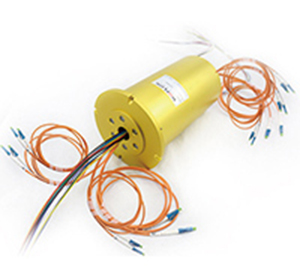
Imagine a world where high-speed data and high-power signals must pass flawlessly across a continuously rotating interface—think of advanced radar systems scanning the horizon, wind turbines adjusting to changing winds, or robotic arms in precision manufacturing. The unsung hero enabling this seamless transmission is the optical rotary joint, a device that has become vital in China's rapidly evolving industrial landscape. As demand for fiber optic connectivity in rotating platforms surges, understanding the key technologies behind these joints—from low insertion loss to high return loss and multi-channel integration—is crucial. At the forefront of this field, MOFLON has been refining designs that tackle challenges like signal integrity under harsh conditions. But what truly sets China’s latest optical rotary joint innovations apart, and how are they reshaping industries from defense to renewable energy? Dive in as we unravel the core technologies and real-world applications that are redefining connectivity in motion.
Core Innovations in Fiber Optic Rotary Joints
A quiet leap forward in rotary fiber optic design has been the shift toward true contactless optical coupling. Instead of relying on physical contact between fiber ends—which inevitably wears and degrades signal quality—modern joints use precision micro-optics to route light across a sub-millimeter gap. The beam is collimated, passed through a rotational interface, and then refocused into the stationary fiber with minimal insertion loss. This approach not only eliminates mechanical wear but also shrugs off vibration and minor misalignments that would cripple older designs.
Multi-channel capability used to demand bulky, parallel optical paths that clashed with tight space budgets. A subtler advance has been the integration of wavelength division multiplexing directly into the rotary joint. By fusing multiple channels onto a single optical path—each on a separate wavelength—engineers have collapsed what once required several separate rotaries into a single compact unit. The innovation lies less in the optics themselves and more in the athermal design of the internal multiplexers, which maintain channel isolation across wide temperature swings without active compensation.
The boundary between the electrical and optical domains has been another frontier. Past hybrid slip rings often treated fiber and copper rings as separate assemblies stacked in a housing. Recent designs embed the optical path inside a hollow electrical rotor, coupling light directly through the center of a slip ring capsule. This not only shortens the overall length but also allows both signal types to share a common pressure and temperature compensation mechanism, significantly simplifying field installation in environments ranging from wind turbine nacelles to undersea remotely operated vehicles.
Advancements in Multi-Channel Signal Transmission
Modern communication systems have witnessed transformative breakthroughs in how multiple signal streams are handled simultaneously. Rather than treating interference as a nuisance, techniques like spatial multiplexing and advanced beamforming now exploit the multi-path nature of wireless channels to multiply capacity. By shaping and steering signals with precision, arrays of antennas can independently serve multiple users in the same time-frequency slot, turning what was once a bottleneck into a rich resource for higher throughput.
At the hardware and algorithmic level, progress in full-dimension MIMO and distributed antenna systems has redefined what’s possible. Instead of bulky, static setups, we now see reconfigurable intelligent surfaces that dynamically sculpt the propagation environment, allowing signals to navigate around obstacles and reach areas that were previously dead zones. These improvements aren’t just about boosting raw speed; they enable ultra-reliable low-latency links critical for autonomous vehicles, telemedicine, and immersive virtual interfaces.
Equally important are the recent strides in signal processing that untangle overlapping transmissions efficiently. Deep learning-based channel estimators and detectors can adapt in real time to unpredictable interference patterns, making robust multi-channel reception feasible even in crowded spectrum. Coupled with smarter modulation and coding, such advances allow networks to gracefully scale to thousands of simultaneous connections—a necessity as the number of connected devices continues to soar well beyond traditional mobile phones.
Breakthroughs in High-Speed Data Routing
The evolution of data routing has taken a dramatic leap forward with the introduction of photonic switching, where light pulses replace electrical signals to direct traffic. This eliminates the latency and heat issues that have long plagued electronic routers, enabling terabit-per-second throughput without the need for bulky cooling systems. Network architects are now rethinking backbone infrastructures to harness these optical pathways, slashing energy consumption while boosting reliability.
On the software side, intelligent routing algorithms powered by reinforcement learning are rewriting the rules. Instead of relying on static tables, these systems dynamically adapt to traffic surges and link failures in real time. The result is a self-optimizing network that can anticipate congestion and reroute data before slowdowns occur, maintaining crisp, uninterrupted streams even under extreme loads.
Another quiet revolution is unfolding at the chip level with the rise of programmable network processors. These chips can be reconfigured on the fly to support new protocols, making hardware upgrades as simple as a firmware update. This flexibility allows service providers to roll out cutting-edge features without costly hardware overhauls, keeping pace with the ever-growing hunger for bandwidth.
Precision Engineering for Harsh Environments
Designing machinery that thrives where others fail begins with selecting materials that defy conventional limits. Corrosion-resistant alloys, advanced ceramics, and specialized coatings are chosen not just for strength, but for their ability to shrug off salt spray, abrasive dust, and thermal shock. Every surface finish and seal is calculated to maintain integrity when immersed in chemicals or subjected to relentless vibration.
Tolerances take on new meaning when equipment must operate in arctic cold or desert heat. Components are machined to allow for thermal expansion without binding, while lubrication systems are engineered to flow at temperatures that turn ordinary grease to stone. Sensors and electronics are potted or hermetically sealed, isolating them from moisture and corrosive atmospheres, ensuring that feedback loops remain accurate when it matters most.
Validation means testing beyond the expected. Prototypes endure accelerated life cycles in custom chambers that simulate years of exposure to salt fog, sandstorms, and pressure extremes. Every fastener, gasket, and circuit is scrutinized until failure, then redesigned. The result is machinery that doesn't just survive harsh environments—it performs with the same precision as equipment in a climate-controlled cleanroom.
Integrating Optical Rotary Joints in Medical Robotics
Optical rotary joints are becoming essential in medical robotics due to their ability to transmit high-bandwidth signals and power across rotating interfaces without compromising sterility or precision. In surgical robots, for example, the continuous rotation of end-effectors demands a seamless flow of data from sensors and cameras. Traditional slip rings often introduce noise and maintenance issues, whereas optical joints offer contactless operation, ensuring reliable signal integrity in critical procedures.
Integrating these components requires careful alignment of optical pathways and consideration of the harsh sterilization environments. The joints must withstand repeated autoclaving and exposure to chemicals, all while maintaining sub-micron accuracy. Designers often encapsulate the optics in biocompatible materials and use advanced collimation techniques to minimize insertion loss. This not only extends the lifespan of the robot but also reduces the need for recalibration between surgeries.
Practical implementation often involves customizing the joint’s form factor to fit compact robotic arms. For instance, in ophthalmic microsurgery, where rotational freedom and real-time imaging are vital, a miniaturized optical rotary joint can enable 360-degree motion without tangling fiber optics. Such integration simplifies the system architecture, lowers the overall weight, and enhances maneuverability, ultimately leading to smoother operations and improved patient outcomes.
Enhancing Wind Turbine Efficiency with Rotational Optics
Harnessing the power of rotational optics opens up a new frontier in wind energy. By embedding fiber-optic sensors directly into the turbine blades, operators gain real-time insight into structural loads, vibration patterns, and aerodynamic behavior as the blades sweep through the air. This continuous stream of high-resolution data enables instantaneous pitch adjustments and yaw corrections, minimizing fatigue loads while maximizing energy capture. Unlike traditional electronic sensors, optical fibers are immune to lightning strikes and electromagnetic interference, making them uniquely suited to the harsh environment inside a spinning rotor.
The real breakthrough lies in how rotational optics transforms blade monitoring from periodic inspections to persistent, in-service analysis. Distributed strain and temperature measurements along the entire blade length reveal subtle deformations that would otherwise go unnoticed until a costly failure occurs. By feeding this information into advanced control algorithms, turbines can adapt to turbulent gusts and wind shear with a finesse that rigid, schedule-based systems simply cannot match. The result is not just more kilowatt-hours generated, but also extended component lifetimes and reduced maintenance visits—a crucial advantage as turbines march farther offshore and into remote terrains.
FAQ
China emphasizes vertical integration and rapid scaling, leveraging domestic supply chains for components like precision bearings and fiber collimators. This contrasts with more specialized, boutique approaches common elsewhere, allowing cost-effective production for high-volume sectors such as wind energy and industrial automation.
Multichannel fiber optic rotary joints using wavelength division multiplexing, hybrid designs that combine electrical and fluid paths, and advanced sealing for harsh environments are pivotal. Innovations in gradient-index lenses and automated alignment processes also significantly boost performance.
They enable real-time data transfer from rotating wind turbine blades to stationary control systems, facilitating condition monitoring and pitch control. Chinese manufacturers have adapted these joints to withstand extreme weather, making them vital for both onshore and offshore farms.
Maintaining insertion loss below 1 dB while ensuring rotational life exceeding 100 million cycles remains tough. Contamination during assembly and thermal expansion mismatches between materials also require rigorous quality control, pushing firms to refine cleanroom protocols and testing.
They are essential for satellite antenna tracking systems and gimbal-mounted sensors, where uninterrupted optical signals must pass through rotating interfaces. Chinese space programs rely on custom, radiation-hardened joints that maintain alignment in vacuum and under launch vibrations.
Industrial settings demand ruggedness against dust, moisture, and shock, leading to armored designs with redundant channels, while telecom applications prioritize ultra-low loss and wide bandwidth over long distances, often using single-mode fiber and dense multiplexing. China's factory automation boom tilts R&D toward the former.
Adoption of ceramic ferrules, diamond-like carbon coatings on contact surfaces, and composite housings reduces wear and extends service intervals. These materials also improve thermal stability, crucial for outdoor installations spanning -40°C to 80°C.
Conclusion
China has made remarkable strides in the field of optical rotary joints, driven by core innovations that overcome the limitations of traditional slip rings. Advanced fiber optic rotary joint designs now ensure minimal signal loss and high reliability during continuous rotation, which is vital for applications demanding uninterrupted optical connectivity. Breakthroughs in multi-channel signal transmission allow simultaneous handling of multiple optical paths, enabling compact devices to carry vast amounts of data. This is complemented by high-speed data routing technologies that maintain signal integrity even under extreme rotational speeds, paving the way for real-time, high-bandwidth communication in dynamic systems.
Precision engineering tailored for harsh environments has expanded the use of optical rotary joints into challenging sectors such as offshore wind farms and deep-sea exploration. In medical robotics, their integration enables seamless rotation of imaging sensors and surgical tools, enhancing dexterity and precision without compromising data quality. Furthermore, the adoption of rotational optics in wind turbines has significantly improved efficiency by facilitating reliable data transfer for pitch control and condition monitoring. China’s concerted push in these areas is not only advancing technical boundaries but also fostering practical solutions that meet the rigorous demands of modern industry.
Contact Us
Contact Person: Xiangpin Li
Email: [email protected]
Tel/WhatsApp: 86 186 1706 8578
Website: https://www.moflon.com