

Chinese Drying Machine Advantages for Modern Industries
2026-08-30
For decades, drying technology in manufacturing has been a bottleneck—energy-hungry, uneven, and often damaging to sensitive materials. Yet a quiet revolution is unfolding in China, where engineering ingenuity is redefining what industrial dryers can achieve. Among the standout names driving this shift is MINGDE, a brand that has turned precision drying into a competitive advantage for food, pharmaceutical, and chemical producers worldwide. But what exactly sets Chinese drying machines apart from their Western counterparts? The answer lies not in cheap labor, but in smart design, adaptive controls, and a relentless focus on energy efficiency that modern industries can no longer ignore.
The Silent Workhorse: How Chinese Drying Machines Keep Production Lines Moving
Walk behind any busy plastics processing floor and you will barely notice them—compact hopper dryers and desiccant wheel units hum quietly beside molding machines, pulling moisture out of resin before it ever reaches the barrel. What they lack in size compared to injection molding presses or extruders, they make up for in consistency. A well-built Chinese drying machine does not ask for attention; it simply holds dew point steady hour after hour, so operators can focus on part quality instead of chasing wet material problems.
That reliability shows up most clearly during long production runs. Heat-sensitive polymers, glass-filled nylons, and recycled feedstock all punish even small swings in moisture content with splay, brittleness, or blocked hot runners. The latest generation of Chinese-made dryers addresses this with closed-loop temperature control, multi-bed desiccant regeneration, and smart sensors that adjust airflow to match actual pellet consumption. When a line switches from slow-moving thick-wall parts to fast thin-wall containers, the dryer adapts without a manual reset—meaning fewer interruptions and far less scrap.
The real payoff is less dramatic than a machine breakdown, but it shows up on the shift report: fewer rejected shots, lower energy draw per kilogram dried, and predictable start-up times after weekend shutdowns. Many plants now run these dryers side by side with European and Japanese equipment, and the difference in uptime is often academic. The point is not that they are invisible because they are unimportant; they are invisible because they work.
Beyond the Price Tag: What Chinese Dryers Really Deliver
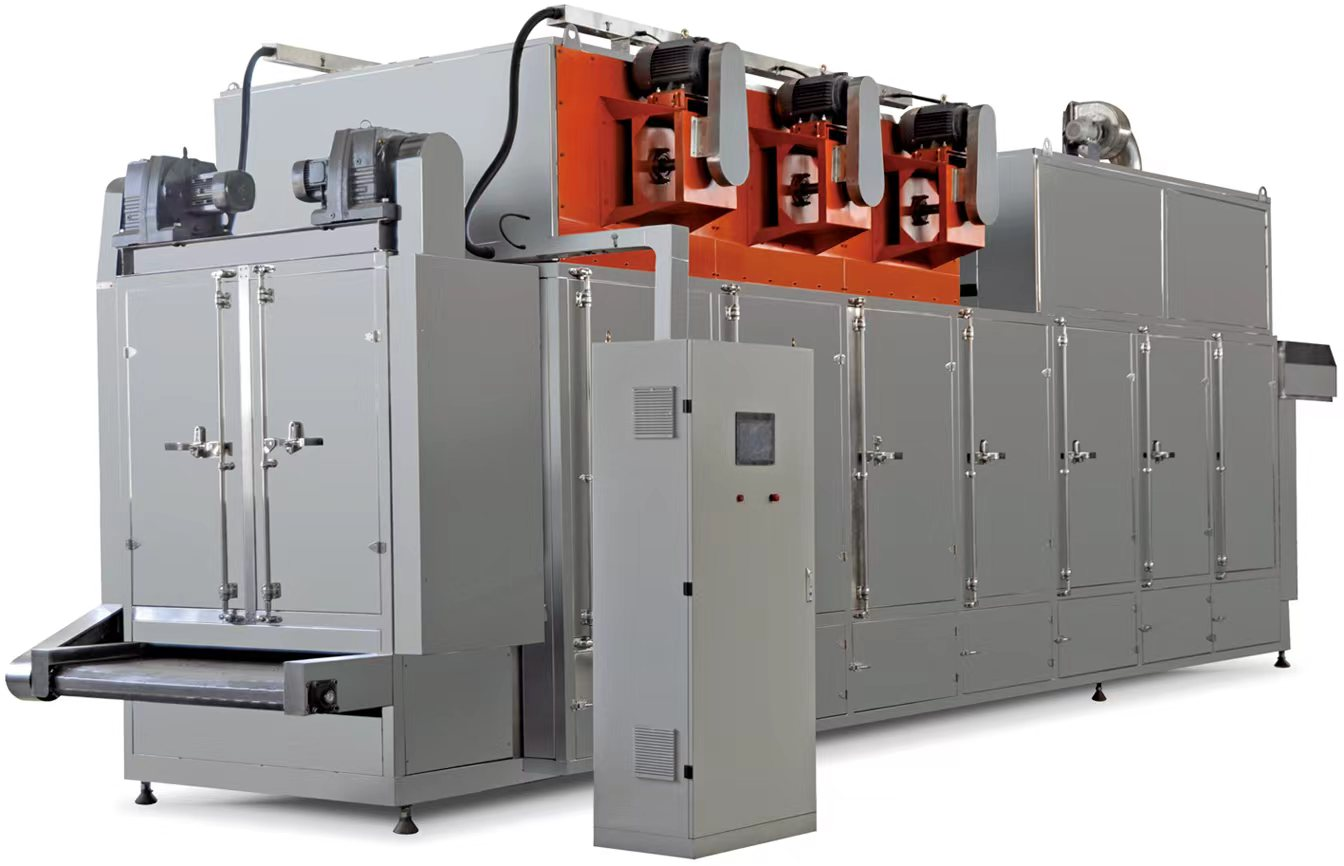
When most buyers look at a Chinese dryer, the first thing they notice is the number on the price tag. What they often miss is the quiet engineering underneath. These machines are built around a simple idea: remove moisture without removing moisture from your wallet over time. The stainless steel drums, the sealed bearing systems, the auto-sensing humidity controls—these aren't premium add-ons. They're standard. The result is a dryer that doesn't just cost less to buy, but also costs less to run and less to repair over a decade of laundry loads.
There's also a stubborn misconception that lower cost means lower drying quality. In practice, many Chinese dryers use heat pump technology that was considered high-end in Western brands only a few years ago. This means lower temperatures, less fabric shrinkage, and far less energy use per cycle. The sensors stop the drum when clothes are actually dry, not when a timer says so. That's the kind of practical intelligence that matters more in the long run than a polished logo on the door.
What really sets these machines apart, though, is how they handle the mundane realities of household drying. Lint filters that are easy to reach without bending down, drums that reverse direction to prevent sheets from balling up, quiet modes for night use. These aren't flashy features. They're the small, daily conveniences that make a dryer feel like it was designed by someone who actually does laundry. And that, more than any spec sheet, is what Chinese dryers genuinely deliver.
When Every Percentage Point of Moisture Matters: Precision Drying from China
In industries where a single percentage point of moisture can separate a premium batch from a rejected one, drying is never just a step in the process—it is the difference between profit and loss. Chinese manufacturers have spent the last decade refining precision drying systems that hold moisture content within a tolerance band so tight that even laboratory-grade hygrometers struggle to register the drift. The focus is not on speed or throughput alone, but on repeatability: the same incoming material, the same final moisture reading, every single cycle, without operator intervention.
What sets these systems apart is the layered approach to control. Air temperature, dew point, airflow velocity, and residence time are managed as a single interdependent loop rather than isolated set points. This means a 0.3% shift in ambient humidity does not translate into a 0.3% shift in the finished product. Instead, the system compensates in real time, adjusting fan speed or heat input before the deviation can affect the grain bed, the powder layer, or the extruded pellet. For operations handling heat-sensitive materials—botanicals, specialty starches, nutraceutical blends—that level of responsiveness is the only way to preserve active compounds while still hitting the target moisture window.
The real test, however, comes when the dried material leaves the chamber and enters storage or downstream processing. Precision drying from China is engineered with that next stage in mind. Moisture uniformity is measured not just at the discharge chute but across the entire batch profile, so there are no wet pockets hiding in the core or over-dried edges that will crumble during handling. Buyers who once accepted a ±1% moisture spread are now specifying ±0.2%, not because the specification sounds impressive, but because that narrow band is what keeps their own lines running without bridging, caking, or microbial surprises. The most telling sign of maturity in this field is that the conversation has moved from "how fast can you dry it" to "how precisely can you hold it"—and the answer, increasingly, is coming from workshops in Jiangsu and Guangdong rather than legacy names in Europe or North America.
Built for the Long Haul: Why Chinese Drying Equipment Outlasts Expectations
A quick glance at the frame of most Chinese drying systems reveals thicker steel and fewer flimsy seams than you might expect from the price tag. Many manufacturers build for humid, dust-heavy workshops where downtime is costly, so they reinforce corners, use continuous welds instead of spot welds, and fit bearings that tolerate thermal expansion. That overbuilt approach carries straight into export models, which is why units often arrive looking less polished but end up running trouble-free past their quoted service intervals.
The real difference shows up in the details that get ignored until year three or four. Heat exchanger tubes are commonly cut from 304 stainless rather than galvanized sheet, fan housings get drip edges to keep condensation away from motors, and control panels are sealed against fine powder ingress. In rice mills and spice processing plants across Southeast Asia, these machines routinely handle 16-hour shifts without bearing replacements—something many operators admit they didn't expect from a "budget" import.
What keeps them going isn't a single trick but a practical mindset: components are chosen for field serviceability rather than showroom appeal. Fasteners are standard metric sizes, belt tensioners are accessible without removing guards, and local distributors stock wear parts. That combination of rugged construction and easy maintenance is why buyers who initially bought on price often reorder the same equipment when expanding capacity.
From Rice to Rare Earth: The Surprising Reach of Chinese Drying Tech
Walk through any modern grain processing facility in Southeast Asia and you'll likely encounter a row of industrial dryers bearing Chinese nameplates. These machines, originally designed to handle paddy rice in humid climates, use a combination of low-temperature airflow and precise moisture sensors to dry grain without cracking kernels. The same underlying approach—gentle, controllable dehydration—turns out to be remarkably adaptable. Engineers in Guangdong realized that the variable-frequency fans and programmable logic controllers developed for rice could also handle lithium carbonate, a critical battery material that clumps disastrously if dried too fast.
That insight has quietly pushed Chinese drying equipment into mines and chemical plants far beyond agricultural belts. Rare earth processing, notoriously finicky, relies on uniform drying to avoid altering oxidation states. A rice dryer's ability to hold a steady 60°C while circulating air through stacked trays translates directly to drying neodymium oxalate without hot spots. Several producers in Inner Mongolia now use modified grain dryers for exactly this task, swapping stainless steel mesh for food-grade plastic and recalibrating humidity setpoints. The machines cost a fraction of purpose-built chemical dryers, yet deliver the same consistency.
The reach extends further: pharmaceutical intermediates, seaweed extract, even shredded recycled battery black mass. What makes the shift surprising isn't the technology—drying is drying—but the business logic. Chinese manufacturers built massive spare capacity for agricultural seasons, then found ways to keep factories busy year-round by re-engineering rice dryers for industrial clients. That cross-pollination means a single production line in Shandong might ship identical core modules to a Cambodian rice cooperative and a lithium refinery in Chile, differing only in the control software and material contact surfaces.
Cutting Energy Costs Without Cutting Corners: A Look Inside Chinese Dryers
The first thing you notice when you open up a modern Chinese dryer is how little heat escapes the cabinet. That's not accidental. Instead of simply bolting on a bigger heating element, manufacturers have shifted to heat pump systems that recycle warm air through a closed loop. The compressor and evaporator are tucked neatly beside the drum, pulling moisture out of the air and reusing the leftover heat for the next pass. This alone can drop energy use by half compared to a conventional vented dryer, yet the drying time stays reasonable because the drum rarely needs to reheat from scratch.
Insulation matters just as much as the heating source. Several Chinese models now use double-layer side panels with a thin aerogel or mineral wool layer, keeping the drum warm without making the machine bulky. The drum itself is often textured stainless steel, which holds heat well and transfers it evenly to the fabric. Meanwhile, moisture sensors placed near the lint filter and at the drum rear send real-time readings to the control board, so the dryer stops the moment the clothes hit the target dryness instead of running an extra ten minutes just in case.
The user-facing side isn't ignored either. Many Chinese dryers include a maintenance reminder that tracks filter and condenser cleanliness, because a clogged filter can easily erase the efficiency gains from the heat pump. Some models let you choose between an eco mode that extends cycle time slightly in exchange for lower peak power draw, and a quick mode that uses a smaller auxiliary heater only when truly needed. It's a practical balance: the machine gives you control over the trade-off, but the default settings are tuned to keep the energy bill down without leaving clothes damp.
FAQ
Food processors often deal with tight margins, so the lower upfront cost of Chinese dryers is a big draw. Beyond price, many manufacturers now offer models with precise humidity controls and stainless-steel chambers that meet international hygiene standards, which matters a lot for products like dried fruits or instant noodles.
Quite flexibly, in practice. Many suppliers will adapt chamber size, airflow patterns, and even add features like explosion-proof motors or clean-in-place systems. Because engineering teams are usually in-house, turnaround for a custom quote and drawings tends to be faster than with some Western counterparts.
Modern units increasingly use heat pump technology or waste heat recovery, which can cut energy use noticeably compared with older convection designs. Some chemical plants report utility savings after switching, though actual numbers depend on the material's moisture profile and required throughput.
A significant one. Many mid-range and high-end Chinese dryers now come with PLC controls, touchscreen interfaces, and remote monitoring. For electronics, this means consistent low-humidity drying cycles and data logging for quality audits, reducing human error on sensitive components.
Generally shorter, sometimes by several weeks. Standard models are often kept in partial stock, and even customized systems can ship within 60 to 90 days. This helps manufacturers avoid long project delays, especially when expanding a production line quickly.
Reliability has improved a lot in the past decade. Heavy-duty rotary or belt dryers from established Chinese brands are built with thicker steel and better insulation than low-cost imports of the past. Many plants run them 24/7 with routine maintenance, though it's still wise to check references for your specific material.
They're actually a strong fit for SMEs. Chinese suppliers often have lower minimum order quantities and are willing to produce compact or semi-custom units. This lets smaller food or herbal processing businesses get a dryer that matches their output without paying for excess capacity.
Look beyond the price tag. Ask for a detailed specification sheet, material thickness, motor brand, and control system type. Request a video of the actual machine running or arrange a factory audit. A supplier that openly provides documentation and past client contacts is usually a safer bet.
Conclusion
Chinese drying machines have become the silent workhorses of modern production lines, earning their place not through flashy claims but through round-the-clock dependability. In industries as varied as rice milling, ceramic powder processing, pharmaceutical granulation, and rare earth refining, these systems maintain precise moisture targets—often within half a percentage point—batch after batch. That consistency directly reduces rejected material and downstream bottlenecks. Operators rarely need to adjust settings once a line is tuned, and the equipment's ability to handle everything from heat-sensitive food flakes to abrasive mineral slurries means a single supplier can often cover multiple process steps.
Beyond initial cost, what keeps buyers coming back is the combination of long service life and sensible energy engineering. Many Chinese dryers use multi-stage heat recovery, variable-speed fans, and insulated drying chambers to cut electricity or gas use by a noticeable margin without slowing throughput. The frames and wear parts are built heavier than expected for the price, so a well-maintained unit can run a decade or more before major refurbishment. Field reports from textile, wood, and chemical plants point to the same pattern: the real advantage shows up in lower operating cost per ton and fewer unplanned stops, not in the purchase order itself.
Contact Us
Contact Person: LILY SUN
Email: [email protected]
Tel/WhatsApp: 0086-13969103791
Website: https://www.snackfoodmachinery.com/