
Flour Processing Machine Manufacturer Guide: Selecting the Right Equipment for Your Mill
2026-05-07
Every flour mill starts with a single, crucial decision: the machinery that turns grain into gold. With so many options on the market, how can you be sure you're choosing equipment that won't let you down when it matters most? Whether you're upgrading an existing line or building a new mill from scratch, the right processing partner makes all the difference. At PINGLE, decades of engineering excellence meet a deep understanding of what millers actually need—efficiency, reliability, and support that lasts. Before you dive into specs and comparisons, let's look at what truly separates a workhorse from a headache, so your next investment powers years of smooth production.
Assessing Your Mill’s Production Capacity Needs
Before expanding or upgrading, take a hard look at current output versus what’s really demanded. It’s easy to assume that bigger is better, but overestimating needs can strain resources and underutilize expensive machinery. Start by tracking actual daily throughput over several months—accounting for seasonal spikes, maintenance downtime, and raw material variability. A mill that consistently runs at 85% capacity might not need a full-scale expansion, just smarter scheduling or targeted bottleneck fixes.
Conversations with the floor team often reveal mismatches between theoretical capacity and on-the-ground reality. Operators know which machines lag, which shifts underperform, and where material handling slows things down. Combine their insights with historical order data to map out true demand patterns. Instead of generic benchmarks, build a capacity model that reflects your specific product mix—high-margin custom orders might require flexible, lower-volume setups, while commodity runs benefit from high-speed, dedicated lines.
Finally, consider how capacity ties into longer-term goals without relying on guesswork. If you’re eyeing new markets or different product grades, run small pilot batches on existing equipment to gauge real constraints. Factor in the cost of quality issues that arise when pushing machinery too hard, and weigh that against the price of adding a shift or outsourcing overflow. The goal isn’t just to produce more, but to align your mill’s capability with profitable, sustainable growth.
Matching Equipment to Grain Varieties and Flour Types
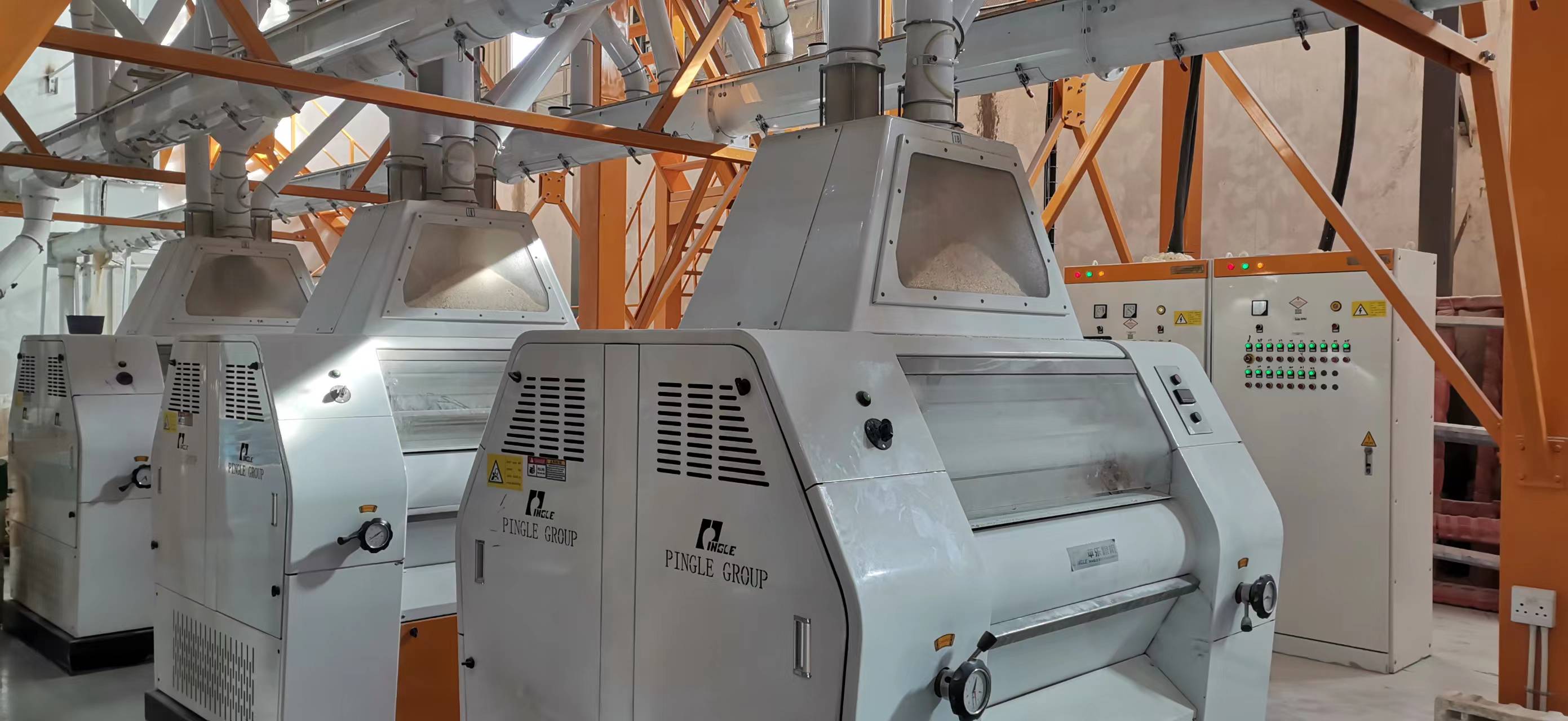
Different grain varieties demand distinct milling approaches. Durum wheat, with its hard kernels, typically calls for roll gap adjustments and careful tempering schedules that differ sharply from what soft white wheat would need. Rye and spelt often require slower feed rates to avoid excessive heat buildup, while ancient grains like einkorn might perform better on stone mills than on modern roller systems. The equipment setup isn’t just about cracking the grain—it’s about preserving its natural oils and flavor profile.
Flour type adds another layer of complexity. Producing fine pastry flour means tighter settings and multiple sifting passes, whereas whole wheat flour might go through a simpler, coarser grind to retain bran particles. High-extraction flours, favored in artisan baking, push mills to balance throughput with particle size uniformity. Even subtle differences in gluten strength can shift a miller’s choice between a pin mill and a hammer mill. Matching the machine to both the grain’s personality and the intended flour specification keeps the final product consistent and bakery-ready.
Evaluating Build Quality and Long-Term Durability
Assessing how something is put together often starts with the visible joints and seams. Look for clean welding, consistent stitching, or precisely fitted edges—these small details usually hint at the effort invested in the entire product. When manufacturers cut corners, they rarely hide it well. You might feel slight wobbles, see uneven gaps, or notice materials that flex too easily under light pressure. These aren't just cosmetic issues; they're early warnings about how the item will hold up over months of daily use.
Beyond initial impressions, long-term durability depends a lot on material choices and how they respond to real-world conditions. For instance, metals that resist corrosion, fabrics treated to repel moisture, and plastics formulated to avoid becoming brittle with age all contribute to a longer lifespan. It's also wise to pay attention to replaceable parts—things like bearings, seals, or straps. If a product is designed so you can swap out worn components, it's a strong signal that the creator actually thought about the full lifecycle, not just the first sale.
There’s no substitute for watching how things age over months and years. Some materials develop a patina that adds character; others just degrade. A well-built item often shows its quality over time, with joints staying firm and surfaces resisting everyday scratches. Reading through user experiences that go beyond a few weeks can reveal patterns: do zippers jam after a season, do hinges loosen, do colors fade unevenly? Gathering this kind of real-world data helps you separate clever marketing from genuine craftsmanship.
Energy Efficiency and Operational Cost Considerations
Shifting from reactive equipment maintenance to data-driven oversight often cuts energy consumption by 15–20% without major capital outlay. Real-time monitoring platforms that track voltage, airflow, and thermal loads across a facility uncover patterns invisible to manual inspections. When a chiller plant’s setpoints are adjusted dynamically based on occupancy and ambient conditions, the savings compound over months. Facilities teams that embrace these granular adjustments not only lower kilowatt-hour use but also extend the life of compressors and heat exchangers, deferring replacement costs that would otherwise hit the operations budget hard.
Operational expenses extend well beyond monthly utility statements. The hidden toll of unscheduled downtime—lost production hours, emergency labor call-outs, and expedited parts shipping—often eclipses the direct energy bill. Predictive algorithms that analyze motor vibration spectra or transformer temperature drift can flag anomalies weeks before failure, allowing planned interventions during normal shutdown windows. Pairing this with time-of-use energy contracts and automated load shedding during peak-rate periods turns a building’s electrical profile from a fixed cost center into a flexible asset that responds to market signals while maintaining occupant comfort.
Some of the most impressive paybacks come from retro-commissioning efforts that realign legacy systems with actual operating requirements rather than original design assumptions. A 20-year-old air handler, when stripped of overridden dampers and sensor drift errors, often reveals startling spare capacity. Supplementing this with on-site battery storage that shaves demand spikes can reshape a facility’s cost trajectory entirely. The arithmetic is straightforward: every kilowatt not consumed in the first place is cheaper than any kilowatt generated—and far cleaner. Organizations that operationalize this principle find that energy efficiency and cost competitiveness reinforce each other in ways that quarterly financial reports never fully capture.
Navigating Automation and Control System Options
Selecting the right automation and control system begins with a clear understanding of your operational landscape. It's not just about comparing technical specs; you need to map out the specific workflows, identifying points where manual handoffs create delays or where inconsistent data undermines decision-making. Take a deep dive into how different subsystems currently communicate—or fail to—and look for hidden interdependencies that could complicate a new installation. Often, the best insights come from the operators and technicians on the floor, whose practical knowledge reveals which features matter most in daily use.
Beyond immediate needs, a forward-looking approach weighs the system's adaptability. Modern industrial environments evolve quickly, and a rigid solution can become a costly bottleneck. Evaluate whether the platform supports open standards for data exchange, modular expansion, and seamless integration with existing ERP or MES layers. The software ecosystem matters just as much as the hardware; robust diagnostic tools, user-friendly programming interfaces, and accessible training resources can dramatically shorten the learning curve and reduce long-term support burdens. Don't be swayed by flashy dashboards alone—test the system's responsiveness under real-world load scenarios that mimic your peak production demands.
Finally, a thorough vendor assessment goes far beyond price. Probe their track record in projects of similar scale and complexity, and ask pointed questions about post-installation support response times and spare part availability. A vendor that offers co-engineering support during the design phase can help you avoid expensive customization traps. Where possible, arrange site visits to see similar systems in action, and talk to the people using them daily about what works and what doesn't. The goal is a partnership that extends well into the lifecycle of your facility, ensuring the control system remains a reliable backbone rather than a persistent headache.
Supplier Support, Spare Parts, and After-Sales Service
When you invest in equipment, the quality of supplier support determines how smoothly your operations run over time. A responsive partner doesn't just hand over a product—they stay engaged, offering real-time guidance, customized maintenance schedules, and proactive updates that keep your workflow uninterrupted.
Spare parts availability is the backbone of reliability. Waiting weeks for a critical component isn't feasible in a fast-paced environment, so we focus on building a buffer of essential spares and a logistics network that slashes lead times. This way, your production line sees minimal downtime, and you never feel like a single broken part could derail your entire schedule.
After-sales service extends far beyond fixing what breaks. It includes thorough staff training, remote diagnostics, and performance audits that help you extract maximum value from your purchase. Instead of a transactional relationship, you gain a long-term technical ally who understands your specific challenges and scales support as your needs evolve.
FAQ
Look beyond the glossy brochures. Dig into their track record with mills similar to yours, how they handle after-sales support, and whether they can provide genuine references. A manufacturer that asks detailed questions about your grain types and end-product goals is usually more invested than one pushing a one-size-fits-all lineup.
Start by mapping out your peak demand realistically, not optimistically. Factor in seasonal spikes, future growth, and the downtime needed for cleaning and changeovers. Overshooting capacity can waste energy and floor space, while undershooting strangles your business. It's often wisest to choose a modular system that can expand with you.
Today's machines are built with better materials, but they still live in a harsh environment. Regular sifter inspection, roll regrinding schedules, and pneumatic system checks are non-negotiable. Minimize downtime by training your team on basic troubleshooting, keeping critical spares on hand, and forging a tight relationship with a local service technician who knows your layout.
Stone grinding retains more of the grain's natural oils and nutrients, giving a rustic, flavorsome flour, but it's slower and harder to scale consistently. Roller mills excel at precision, high throughput, and separating the endosperm for refined flours, yet they can strip away character. Some progressive mills combine both to offer niche and volume products.
Automation takes human hesitancy out of the equation. Sensors that adjust roll gaps in real time, automatic tempering control, and integrated cleaning systems create a uniform product batch after batch. The efficiency gain isn't just in labor savings, it's in drastically reduced giveaway, fewer rejected batches, and the ability to run lights-out shifts.
Food-grade materials, such as stainless steel in product contact zones, are a must. Look for ISO 22000 or similar food safety management certifications in the manufacturer's own processes. Global safety marks like CE or UL on the equipment itself tell you the design has been rigorously tested. If the manufacturer is transparent about their supply chain and testing protocols, that's a strong green flag.
Never judge by the purchase price alone. Request detailed energy consumption data for typical operations, ask about the lifespan of wear components, and map out the cost and lead time for common spares. A machine that costs more upfront but uses 20% less electricity and has off-the-shelf bearings locally will often pay you back within the first two years.
Look for equipment that supports data-driven milling—machines with built-in sensors that feed into a central analytics dashboard. Also gaining ground are hybrid stone-and-roller systems, compact mill designs for urban micro-milling, and cleaner-in-place technology that slashes sanitation time. Investing in flexibility and connectivity now keeps you from a costly retrofit later.
Conclusion
Finding the right flour processing machinery starts with a clear-eyed look at your mill’s daily throughput and long-term goals. Whether you’re running a small artisanal operation or a high-capacity industrial line, matching equipment to your actual output prevents bottlenecks and wasted investment. It’s equally critical to think about the grains you handle—hard wheat, soft wheat, rye, or specialty varieties—and the flour types your customers demand, from fine pastry flour to coarser wholemeal. The best machinery adapts to these variables with adjustable roll gaps, interchangeable sifters, and gentle handling that preserves grain integrity. But specs alone won’t carry you through years of punishing use; you need to scrutinize build quality, from the robustness of frames and bearings to the materials used in grinding surfaces. A machine that feels solid during a trial run can still wear out prematurely, so pay attention to details like seal protection against dust ingress and ease of access for routine cleaning.
Beyond the mechanical fundamentals, operational costs and intelligent controls shape the true value of your investment. Energy-efficient motors, optimized air flows, and smart power management can dramatically cut electricity bills without sacrificing output. Modern automation—from sensor-based feed rate adjustments to full plant-wide control systems—reduces reliance on operator guesswork, ensuring consistent flour quality batch after batch. Yet even the smartest system is only as good as the support behind it. Before committing, investigate a manufacturer’s track record for spare parts availability, response times for technical issues, and the depth of their after-sales training. A supplier who treats your purchase as a long-term partnership, rather than a one-off transaction, will keep your mill running smoothly and adapt to your evolving needs over time. Taking a holistic view that balances performance, durability, and responsive service turns a complex purchase into a strategic advantage for your milling business.
Contact Us
Contact Person: Jiakuo Wu
Email: [email protected]
Tel/WhatsApp: +86-13011566087
Website: https://www.pinglemachine.com