

Hydraulic Rotary Union: Which One Is Reliable?
2026-09-24
A failed hydraulic rotary union can halt an entire production line in minutes, yet choosing a reliable one is rarely straightforward. Suppliers often use the same technical words—pressure rating, seal material, leak-free design—but field performance tells a different story. So which hydraulic rotary union actually holds up under continuous rotation, high pressure, and thermal cycling? In this article, we break down the factors that separate dependable units from premature failures, and we take a closer look at MOFLON, a brand known for consistent sealing performance in demanding hydraulic applications.
Where Leaks Usually Begin in a Rotary Union
The most common origin point for rotary union leaks is the sealing interface between the rotating shaft and the stationary housing. Here, dynamic seals—often made from elastomers or mechanical face materials—endure constant friction, thermal cycling, and pressure fluctuations. Over time, wear patterns emerge, especially around the primary O-ring or lip seal, allowing media to seep past when the union is under load or even at rest.
Another frequent leak site is the bearing area. Bearings in rotary unions keep the shaft aligned, but if they become worn, pitted, or contaminated, the shaft can wobble slightly. This eccentric movement creates uneven compression on seals, opening micro-gaps that grow with every rotation. Coolant, steam, or hydraulic fluid then follows the path of least resistance, often exiting near the bearing caps or drain ports.
Finally, leaks often start at connection points rather than internal sealing elements. Threaded ports, flanges, and mating surfaces can loosen due to vibration or thermal expansion differences. Even a tiny relaxation in torque can break the metal-to-metal contact, allowing fluid to wick outward. Regular inspection of these external junctions—especially after the first few thermal cycles—can reveal early signs of weepage before it becomes a full-blown failure.
Seal Choices That Hold Up Under Pressure Cycles
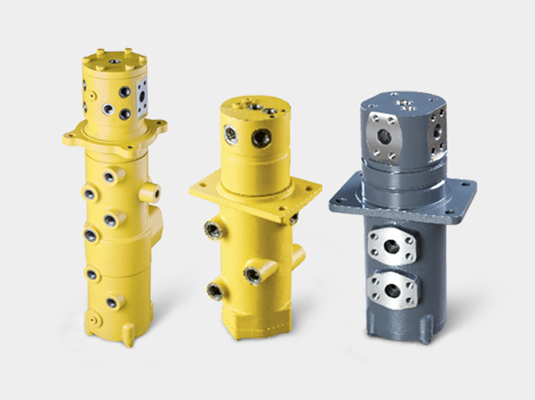
In cyclic pressure applications, seal failures rarely trace back to a single dramatic event. They accumulate through repeated small movements, thermal swings, and micro-extrusion that slowly chew away at the sealing surface. Choosing a seal that survives pressure cycles starts with understanding the actual load path. Elastomer O-rings can work for moderate cycles if the groove design limits clearance and the compound resists compression set. But when pressures swing from near zero to several thousand psi many times per day, the rubber often gets nibbled at the extrusion gap or loses its memory after a few hundred cycles.
Spring-energized PTFE seals offer a better route because the plastic jacket handles the pressure while the metal spring maintains a consistent contact force even as the jacket wears or cold flows. For genuinely punishing duty—rapid reversals, high temperatures, or aggressive media—metal seals or filled PTFE lip profiles make sense. The key is matching the seal's recovery speed to the cycle frequency. A seal that relaxes too slowly will leak during the low-pressure portion of the cycle; one that extrudes at high pressure will fail outright. Field data from hydraulic accumulators and downhole tools shows that a slightly wider backup ring or a more resilient energizer often buys far more cycle life than a harder jacket material.
Why Some Spec Sheets Overstate Service Life
Manufacturers often derive service life figures from accelerated testing under tightly controlled laboratory conditions. Temperature swings, humidity, dust, and irregular load cycles that are common in the field rarely match those ideal parameters, so the resulting numbers lean optimistic.
Maintenance assumptions form another quiet source of inflation. A spec sheet may presume a strict schedule of lubrication, calibration, or part replacement that most operators do not follow precisely. When real-world upkeep falls behind, the gap between claimed and actual lifespan widens.
Selective reporting also plays a role. Brands might highlight the longest-lived samples from a test batch or apply generous safety margins only when it suits marketing. Without a standardized external audit, these figures can drift beyond what typical users will ever see.
A Simple Bench Test Before You Install
Before you bolt anything into place, it pays to spend five minutes on a basic bench test. This quick check can catch faulty wiring, a dead sensor, or a misaligned connector that would otherwise turn a straightforward install into a frustrating afternoon of backtracking. You do not need a full lab setup—just a power source, a multimeter, and the component itself.
Start by connecting the unit to a regulated supply that matches its rated voltage. Watch the current draw on power-up: a sudden spike or a steady overcurrent condition often points to a short or a damaged internal regulator. Then cycle through any built-in outputs or indicators. If the device has a communication line, send a simple command and confirm the response. The goal is not to test every feature, but to verify that the core functions respond before you commit to mounting and routing cables.
Many people skip this step because it feels redundant, especially with new parts. Yet even brand-new electronics can arrive with factory defects or suffer damage in shipping. A bench test takes minutes and gives you the confidence that the part works as expected. If anything behaves oddly, you can address it on the workbench instead of on the vehicle or machine, where access is tighter and mistakes cost more.
What Real Maintenance Records Tell You
A stack of maintenance receipts won't win any beauty contests, but it's the closest thing a used car has to a diary. Look past the smudged ink and you'll see whether the previous owner actually cared for the vehicle or just drove it until something broke. Receipts for oil changes at consistent intervals, brake fluid flushes, and timing belt replacements tell you the car was treated as a long-term investment, not a disposable appliance.
The real value is in the patterns that emerge. If the same component shows up on three separate invoices within a year, that's not routine maintenance—it's a chronic problem the owner kept throwing money at. A rebuilt transmission at 60,000 miles might sound alarming, but if the work was done by a reputable shop and the car has run clean since, it can actually be a point in its favor. The devil is in the details, like whether repairs happened before or after a major failure.
Don't just skim the totals. Check for gaps in the timeline. A car with meticulous records up to 50,000 miles and then radio silence for two years might have been neglected, sold at auction, or repaired off the books. Also look for aftermarket parts that don't match the manufacturer's specs—cheap filters and generic fluids can shorten a vehicle's life even if the receipt says "service performed." The records won't tell you everything, but they'll tell you enough to separate a well-kept machine from a polished gamble.
When Paying Less Up Front Costs More Later
A suspiciously cheap price tag can quietly shift the real expense down the road. The bargain dishwasher that barely lasts two years, the budget software that needs constant paid upgrades, or the discount contractor who leaves behind a mess all follow the same pattern: you save money at the register but pay repeatedly in replacements, repairs, and wasted time.
This happens because low upfront offers often hide thinner materials, weaker support, or rushed workmanship. What looks affordable on day one becomes a series of follow-up purchases and emergency fixes. Over a few years, the total can easily surpass the cost of a sturdier option that would have lasted far longer.
Smart buyers learn to compare not just the sticker price but the likely lifetime cost. Asking how long something will last, what maintenance it needs, and whether the company stands behind its product can reveal that paying a bit more now is often the cheaper path.
FAQ
Look at the machining tolerances and the internal surface finish. A dependable unit usually has hardened steel components, minimal play in the rotor, and seals that are seated without visible gaps. If the manufacturer openly shares cross-section drawings and test data, that is often a good sign.
Seal choice directly determines how well the union handles heat, pressure spikes, and fluid compatibility. Polyurethane works for general hydraulics, but aggressive oils or high temperatures often call for Viton or PTFE. The wrong material can harden, crack, or swell, leading to leaks within weeks.
In many cases, the cause is misalignment during installation or contamination in the fluid. Even small particles can score the sealing surfaces. Another common reason is undersizing the passage for the actual flow rate, which creates internal erosion and premature seal failure.
Bearings keep the rotating and stationary parts aligned under load. Angular contact or tapered roller bearings handle both radial and axial forces better than simple ball bearings. If the bearing starts to wear, the shaft wobbles slightly, and that movement quickly destroys the seals.
Yes, but only if the internal design balances both factors. High speed generates heat, while high pressure stresses seals and housings. A reliable unit will have pressure-balanced seals and a cooling path for the fluid. Without that combination, running at the upper ends of both ratings will shorten its life.
It is one of the strongest reliability indicators. A shop that pressure-tests every unit at operating speed, checks for leaks, and records the results can catch defects before they reach your machine. If no test data is offered, you are essentially paying to do their quality control.
Filter the hydraulic fluid consistently and monitor its temperature. Check for shaft runout or hose misalignment during routine service. Also, replacing seals at the first sign of weeping fluid is cheaper than waiting for a full failure that scores the mating surfaces.
Go custom when your application has unusual port sizes, extreme pressure-velocity combinations, or a tight envelope that forces compromises. Standard models are fine for common tasks, but if you are constantly replacing seals or dealing with heat buildup, a purpose-built design often costs less over a year of uptime.
Conclusion
Most rotary union failures don't start with a catastrophic blowout—they begin as tiny seepage at the seal faces, especially where pressure cycles force the sealing element to flex repeatedly. A seal that works fine under steady pressure can fatigue quickly when the system cycles from low to high every few seconds. That's why the seal material and its backup ring geometry matter far more than the hardness rating printed on a datasheet. Many suppliers quote service life numbers based on ideal lab conditions: clean oil, constant temperature, no side load. Real hydraulic circuits rarely look like that. If a spec sheet promises 10 million cycles, ask whether that number came from a test rig with filtered ISO 32 oil at 40°C or from a splined shaft with vibration and contamination.
Before trusting any rotary union in a production line, run a simple bench test: mount it on a dummy spindle, cycle pressure and rotation speed, and watch for weepage at the drain port after a few hundred cycles. Real maintenance records from plants that run the same union for two years tell you more than any catalog graph. One operator's log might show seal replacements every 400 hours on a cheap unit, while a pricier model with a hardened wear sleeve and dual-seal cartridge runs 3,000 hours without touching. Paying less up front often means buying two or three replacement unions plus the labor to swap them, which wipes out any initial savings. Reliability isn't a single feature—it's how the seal, bearing support, and housing drain path hold up together under your actual duty cycle.
Contact Us
Contact Person: Xiangpin Li
Email: [email protected]
Tel/WhatsApp: 86 186 1706 8578
Website: https://www.moflon.com