

Laser Safety Curtain Supplier: Key Considerations for Optimal Workplace Protection
2026-07-19
When it comes to safeguarding your team from laser hazards, not all protection is created equal. Finding the right laser safety curtain supplier involves more than just picking a product off the shelf—it’s about understanding the specific risks in your workspace and matching them with solutions that don’t compromise on performance or durability. That’s where LASERPAIR comes into view, offering more than just curtains but a partnership in workplace safety. In this post, we’ll uncover the key factors you need to weigh before making a choice, so you can protect your people and your peace of mind with confidence.
Beyond the Beam: What Makes a Curtain Truly Protective?
Most people assume a curtain’s job stops at blocking light. In reality, genuine protection hinges on material density, weave tightness, and how the fabric responds to temperature shifts. A thin polyester panel might darken a room, but it won’t stop heat creeping through the glass on a scorching afternoon. The magic lies in layers—thermal backing, microfoam interliners, or even aluminized coatings that reflect radiant energy rather than absorbing it. Without these, you’re merely dressing a window, not shielding the space.
Durability plays an equally quiet yet critical role. Sunlight is a silent fabric killer, bleaching dyes and weakening fibers month by month. A truly protective curtain resists UV degradation through solution-dyed fibers or specialized finishes that don’t wash away. Look for terms like "colorfast to light" or high UPF ratings baked into the weave, not just sprayed on the surface. If the curtain fades, it’s signaling that the protective qualities are fading right along with it.
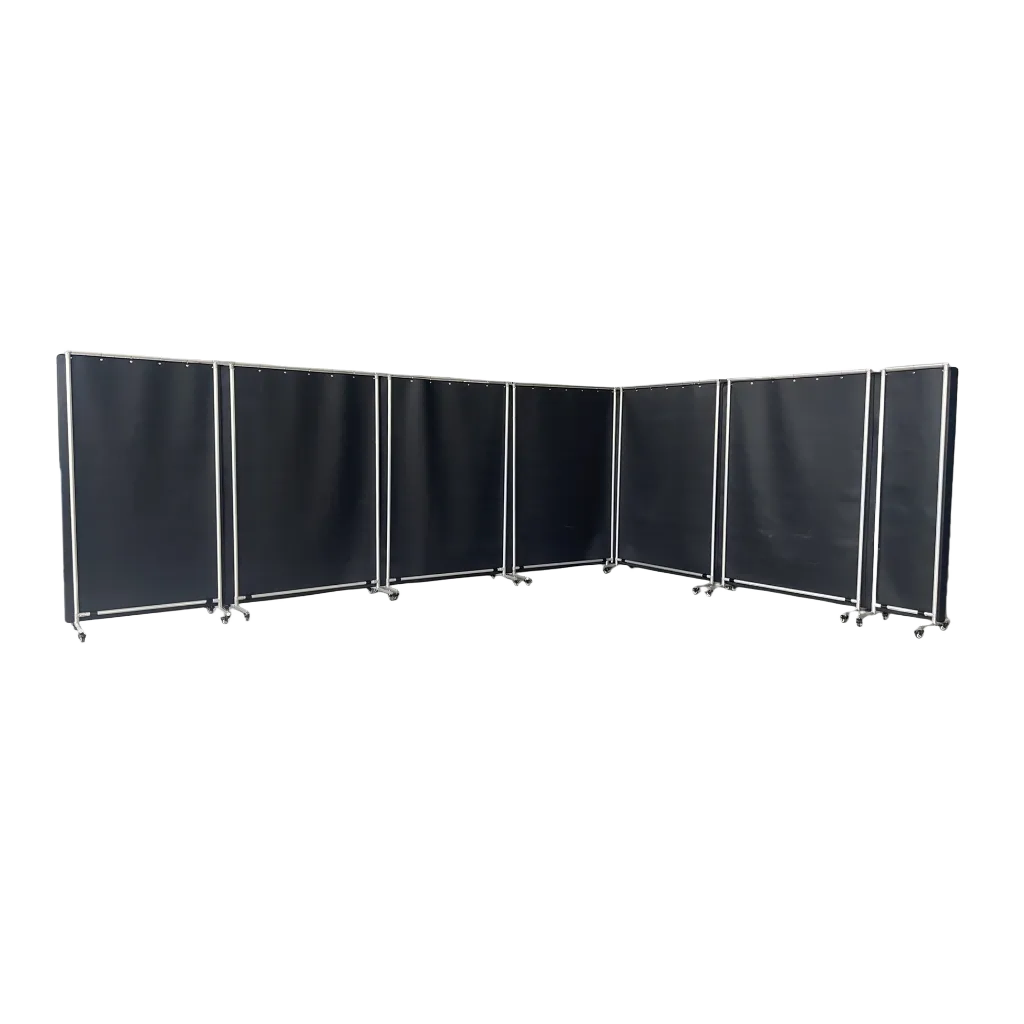
Finally, the architecture of how a curtain hangs seals the deal. Ceiling-mounted tracks that curve back to the wall eliminate the halo of light and heat leakage that rod-mounted panels permit. Overlapped center openings and weighted hems prevent drafts from dancing into the room. It’s a system, not just a piece of fabric. When all these elements converge, a curtain transforms from a simple decor choice into a barrier that actually earns the label "protective."
Certifications Decoded: Ensuring Your Curtain Meets Industry Standards
Navigating the world of curtain certifications can feel like deciphering a secret code, but these labels are your shortcut to quality and safety. Think of them as a backstage pass to understanding exactly what you're bringing into your home—from fire resistance to chemical emissions. The right certification isn't just a badge; it's a promise that the fabric has been rigorously tested and meets specific benchmarks, giving you peace of mind without having to become a textile expert overnight.
When you spot a globally recognized mark like OEKO-TEX Standard 100, it means every component—from the thread to the lining—has been screened for harmful substances. Meanwhile, certifications like GREENGUARD focus on indoor air quality, a game-changer if you're dealing with allergies or a nursery. For commercial spaces or public buildings, fire safety certifications like NFPA 701 or BS 5867 are non-negotiable, ensuring the curtain won't turn a small mishap into a disaster. Each certification targets a different pain point, so matching them to your specific needs keeps you ahead of the curve.
Don't let the alphabet soup intimidate you—once you know what to look for, it's surprisingly empowering. Start by asking suppliers to explain their certifications in plain English; if they can't, that's a red flag. Cross-check the certification body's credibility and look for updated certificates because standards evolve. Ultimately, these stamps of approval transform a simple curtain into a safety net, blending style with substance in a way that's both responsible and refreshingly straightforward.
Tailored Shielding: Why One-Size-Fits-All Doesn’t Cut It
Standard shielding solutions promise broad compatibility, but in practice they often leave critical gaps. A shield that works flawlessly in one device may fail entirely in another due to subtle differences in frequency spectrum, enclosure geometry, or thermal environment. These mismatches force engineers into costly workarounds—adding layers, tweaking layouts, or accepting performance compromises.
Tailored shielding flips this approach by starting with the specific electromagnetic signature of the target system. Instead of forcing a generic can or gasket into place, the shielding is shaped, sized, and material-tuned to address the exact frequencies and field strengths involved. This precision not only closes protection gaps but also avoids over-engineering, which can add unnecessary weight, bulk, or expense.
The result is a shield that integrates seamlessly with the product’s mechanical and thermal design, while delivering consistent performance across production runs. In fields as diverse as medical imaging, aerospace avionics, and high-speed communication, this level of customization is no longer a luxury—it’s the baseline for reliable operation in dense, interference-rich environments.
Seamless Integration: The Art of Effortless Curtain Setup
Getting curtains to look like they naturally belong in a room often comes down to the moments before they ever touch the rod. It starts with understanding the window not just as a functional opening but as a design opportunity. Instead of treating the curtain as an afterthought, think of it as a quiet collaborator that can soften edges, adjust proportions, and bring in texture without demanding attention. The setup process itself—when approached with a bit of patience and the right tools—becomes less of a chore and more of a finishing gesture that pulls the whole room together.
The real secret to a seamless look lies in the hardware you choose and where you place it. Extending the rod beyond the window frame by several inches on each side gives the fabric room to stack without blocking precious daylight. Mounting the brackets closer to the ceiling than the top of the window trim draws the eye upward and creates an impression of taller walls, instantly adding an airy feel. Instead of wrestling with finicky telescopic rods that sag under weight, opt for solid, custom-cut options that lock effortlessly into place and hold even heavier drapes without complaint. The right brackets, anchored firmly into studs or using reliable drywall anchors, eliminate the subtle slant that can throw off the entire visual rhythm of the room.
Once the rod is secure and level, the curtains themselves become the final brushstroke. Hanging them while the panels are still slightly creased from the package might feel practical, but taking the time to steam or iron them transforms the entire experience—the fabric falls in gentle, even pleats that feel intentional rather than forced. When you step back and see the way the fabric meets the floor with just a whisper of a break, or how the stackback on each side mirrors the proportions of nearby furniture, it’s clear the effort was never about technical perfection; it was about creating a sense of calm that feels like the curtains were always meant to be there.
Longevity Factors: Keeping Your Curtains in Peak Condition
Sunlight is both a blessing and a curse for your curtains. While it brightens up your space, prolonged exposure can break down fibers and cause colors to fade unevenly. To counteract this, consider the orientation of your windows and the type of fabric you’re dealing with. Sheer materials are especially vulnerable, so a simple habit like rotating your panels every few months or drawing the blinds during peak hours can distribute wear more evenly and slow down deterioration.
Dust and airborne particles are silent saboteurs. They settle into the weave, acting like sandpaper every time the fabric moves. A weekly gentle vacuum with an upholstery attachment or a soft brush will lift away the grime before it becomes embedded. For deeper cleaning, stick to methods that match the specific material—some can handle a cool, delicate machine cycle, while others demand the care of a specialist. Never underestimate the power of mild, fragrance-free detergents to preserve both color and texture.
Hardware and hanging techniques play an underrated role in longevity. Rings that snag, rods that rust, or hooks placed too far apart can create stress points that lead to tears. Inspect these elements regularly, and opt for smooth-gliding tracks or rings with a brushed finish. When rehanging after cleaning, ensure the curtain hangs freely without dragging on the floor or cramping against the window frame. Simple adjustments like these prevent strain and keep your curtains looking crisp and effortless for years.
The Human Element: Qualities of a Reliable Laser Safety Partner
Working with lasers demands more than just technical expertise; it requires a partner who genuinely understands the human stakes involved. A reliable laser safety partner doesn’t just recite regulations—they listen. They take the time to learn your team’s daily workflows, the pressure points, and the specific anxieties that come with operating powerful equipment. This deep, empathetic engagement means they can tailor safety protocols that feel intuitive rather than imposed, turning compliance from a checkbox exercise into a shared commitment.
Beyond knowledge, the best partners bring a patience and clarity that cuts through jargon. They explain risks in plain language, empowering every employee—from seasoned engineers to new hires—to speak up about concerns without fear of judgment. When something goes wrong, as it occasionally can, their response isn’t about assigning blame but about problem-solving collaboratively. You’ll recognize this quality when they stay on the call until every question is answered, or when they follow up weeks later just to see how the team is adapting.
Ultimately, trust is built on consistency and a long-term view. A partner who invests in your safety culture beyond a single training session—checking in, updating guidance as your lab evolves, and celebrating your safety milestones—demonstrates that they care about your people, not just the sale. That human connection transforms safety from a set of rules into a living, breathing part of your organization.
FAQ
A reliable supplier should offer site assessments, not just a catalog. Check if they provide guidance on compliance with ANSI Z136 or IEC 60825 standards, and whether they can help with installation challenges like odd-shaped enclosures or high-traffic areas.
You need to match the curtain's optical density (OD) to your laser's wavelength and power. A reputable supplier will ask for your laser parameters and provide test data or certification showing the curtain's attenuation at your specific wavelength, not just a generic rating.
Not even close. Some use layered polymer films, others rely on coated fabrics. The choice depends on whether you need flexibility, resistance to chemicals, or durability against repeated exposure. Off-the-shelf options rarely cover every scenario.
Yes, many suppliers offer modular framing or magnetic mounting systems that can be set up without drilling into floors or walls. Discuss your layout early—some can design a freestanding enclosure that still meets safety interlocks requirements.
Ask for third-party test reports from an accredited lab, not just in-house statements. The report should detail the tested wavelength range, optical density values, and damage threshold. If they can't provide it promptly, treat that as a red flag.
It depends on usage, but at minimum, inspect the panels for burns, pinholes, or delamination every six months. If the curtain has taken a direct hit from the beam, it should be replaced immediately—even if no damage is visible, the protective layers may have degraded.
Not necessarily. Some premiums come from brand markup or unnecessary features. Focus on the technical specs that align with your laser's class and operating environment. A smaller specialist supplier might offer equivalent protection at a better value than a large generalist.
Conclusion
Choosing a laser safety curtain supplier goes far beyond just picking a barrier that blocks light. The real protective core lies in how the material handles specific wavelengths, power levels, and exposure durations—factors often overlooked if you only compare basic optical density ratings. A truly protective curtain accounts for back-reflections, scattered radiation, and the cumulative effects of pulsed lasers, which standard data sheets rarely emphasize. Equally critical is verifying that the supplier’s certifications aren’t just paper formalities. Look for rigorous testing against EN 60825-4 or equivalent international standards, and ask how often they revalidate their products. Even the best-lab-rated curtain becomes irrelevant if it doesn’t fit your workspace; off-the-shelf dimensions almost never align with real-world machine layouts, ceiling obstructions, or walkway nuances. A supplier that offers tailored shielding—whether through custom panel sizing, specialized mounting profiles, or modular designs—ensures no dangerous gaps remain. This combination of deep technical understanding, verifiable compliance, and bespoke geometry forms the non-negotiable foundation of workplace safety.
Beyond the raw shielding, the way a curtain integrates into your environment drastically influences daily operations. Seamless installation doesn’t happen by accident; it requires hardware that adapts to existing structures without welding or extensive downtime, and clear guidance that turns a complex setup into a straightforward process. Longevity is another silent factor—protective fabrics exposed to UV, sparks, or mechanical wear can degrade faster than expected, so a supplier’s advice on cleaning routines, storage practices, and periodic inspection schedules directly extends the curtain’s effective lifespan. Yet the most underrated element remains the human side of the partnership. A dependable supplier acts as a consultant, not just a vendor—they invest time in understanding your laser applications, flag risks you haven’t considered, and respond quickly when configurations change. This mix of practical integration support, material durability insights, and ongoing technical dialogue transforms a one-time purchase into a long-term safety strategy, making the supplier choice as crucial as the curtain itself.
Contact Us
Contact Person: Jenny
Email: [email protected]
Tel/WhatsApp: +86 13537713281
Website: https://www.laserpair-safety.com/