

Professional Mixing Tank: Key Features and Selection Guide
2026-05-20
Selecting the right mixing tank isn’t just a purchase—it’s a decision that shapes your entire production line. One wrong choice can lead to inefficiencies, downtime, and costly fixes. So what truly sets a professional mixing tank apart? And how do you navigate the sea of specifications to find your perfect match? At DYE, we’ve engineered solutions that turn these challenges into seamless operations. Let’s dive into the key features and insider selection tips that will transform the way you think about mixing.
Decoding Mixing Tank Design: What Really Matters
Too often, mixing tanks are treated as simple vessels with an agitator bolted on. In practice, the design hinges on a series of linked decisions that start with the process objective. Blending two liquids might require nothing more than adequate turnover, but suspending solids or dispersing gas demands a completely different hydraulic regime. The real challenge is connecting the lab-scale recipe to a full-scale geometry that does exactly what you need without wasting energy.
Impeller selection isn’t a case of picking the most common model from a catalog. The flow pattern—whether you push fluid axially down the center or throw it radially against the wall—dictates how shear and circulation distribute. Axial impellers are often the first choice for solid suspension because they generate a strong downward current that scours the bottom. Radial units, though, excel at gas dispersion and high-shear applications where breaking bubbles or droplets matters more than bulk movement. The trick is balancing tip speed, power draw, and blade shape to avoid dead zones without shredding sensitive particles.
Tank proportions matter more than many realize. A slim, tall vessel with a high aspect ratio can make top-to-bottom turnover difficult unless the impeller setup compensates with strategic baffling. Wider tanks reduce liquid level variation but may require multiple impellers to cover the diameter. And then there’s the material: 316 stainless works for most clean applications, but abrasive slurries or corrosive chemistries can erode standard alloys, altering the flow coefficients over time. Ignoring these details means you’re designing for a theoretical fluid that no longer exists after a few production cycles.
Material Choices That Elevate Performance and Longevity
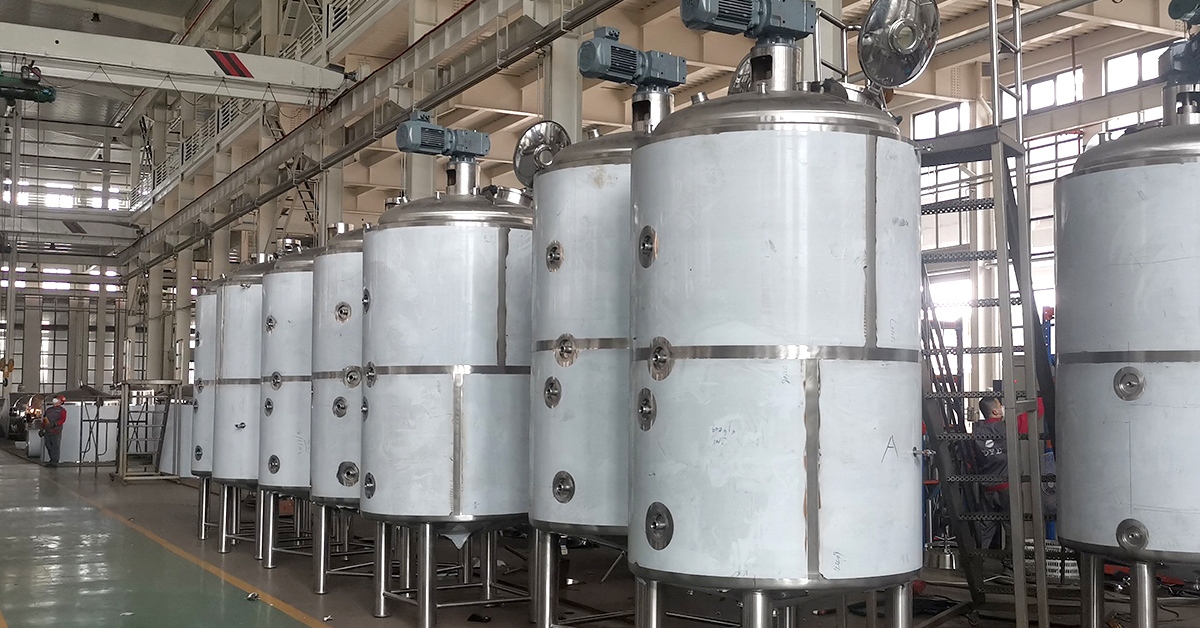
The metals and alloys we rely on daily often hide a quiet battle against wear, corrosion, and fatigue. Take a simple brass valve in a coastal brewery—constant salt mist slowly pits the surface, shortening its life. Switching to a duplex stainless steel with higher chromium and molybdenum creates a passive layer that shrugs off chlorides, almost doubling the component’s functional years without fanfare. It’s not just about picking a harder material; it’s about matching the microscopic resistance mechanisms to the real-world insults they’ll face, whether that’s acidic condensate dripping off a cooling coil or the rhythmic stress of a pump piston cycling millions of times.
Synthetics have evolved far beyond the brittle plastics of decades past. Consider the pump impellers in a wastewater treatment plant: traditional cast iron wears down rapidly from abrasive grit, but an ultra-high-molecular-weight polyethylene (UHMWPE) impeller withstands the same slurry with negligible erosion, while also resisting biofilm buildup. In rotating machinery, polyetheretherketone (PEEK) bushings eliminate the need for external lubrication in high-temperature spots where oil would carbonize, keeping conveyors humming without monthly maintenance shutdowns. These material upgrades often pay for themselves in the first year by slashing unplanned downtime and energy loss due to friction.
Sometimes the most elegant solution is not a exotic new alloy but a smart combination of old ones. A forestry skidder’s grapple fingers last three times longer when the base steel is clad with a wear-resistant overlay using a high-carbon chromium alloy, applied in a strategic chevron pattern that channels debris away from sensitive pivot points. Likewise, ceramics are no longer confined to coffee mugs: silicon carbide mechanical seals in aggressive chemical pumps run dry without shattering, a feat that would destroy a tungsten carbide counterpart in hours. The common thread is a refusal to accept off-the-shelf catalog selections, instead scrutinizing how a material’s grain structure, thermal expansion, and even its acoustic response align with the unique demands of a given application.
Agitator Configurations: Matching the Mix to the Motion
Selecting the right agitator configuration isn't just about spinning a blade—it's about understanding how fluid dynamics respond to impeller design. A paddle that works beautifully for gentle blending might fail completely when you need high-shear dispersion. The geometry, speed, and placement all dictate whether your mixture moves as a unified whole or separates into stagnant zones.
For low-viscosity fluids, a simple propeller pitched at an angle creates an axial flow that pulls material down from the top and circulates it upward along the tank walls. This classic setup excels at solid suspension and heat transfer. But shift to a thicker paste, and the same impeller will just bore a hole through the center, leaving the edges untouched. That's where wide-diameter turbines with angled blades come in, pushing material radially outward to sweep the tank's periphery.
High-viscosity mixing demands a different mindset entirely. Here, close-clearance anchors or helical ribbons slowly knead the product against the vessel wall, preventing dead spots and ensuring uniform temperature distribution. Sometimes the smartest configuration isn't a single agitator at all—it's a dual-shaft system combining a slow anchor with a high-speed disperser, each handling a separate aspect of the process. Matching the motion to the mix means analyzing not just viscosity but also phase interactions, shear sensitivity, and the final particle size you're targeting.
Sizing It Right: Capacity Beyond the Numbers
When most people think of capacity, they picture a fixed number—square footage, seat count, or server throughput. But real capacity isn’t just about the digits on a spec sheet. It’s shaped by flow, flexibility, and the unpredictable rhythm of real-world use. A venue might boast room for a thousand, yet feel cramped at half that if bottlenecks block movement. Likewise, a system rated for 10,000 concurrent users can crumble under 5,000 if those users all hit the same resource at once. Sizing it right means looking past the headline figures and asking how the space or system actually breathes under load.
That deeper view turns capacity planning into an exercise in pattern recognition rather than mere arithmetic. It considers not just peak volumes, but how demand arrives—steady streams versus sudden surges—and how each part connects. In a warehouse, capacity isn’t total pallet positions; it’s the throughput that matters when orders spike and inventory turns accelerate. In software, it’s not CPU cores but how gracefully services degrade when things go sideways. By focusing on the interactions and constraints that numbers alone miss, you design for resilience, not just scale.
Getting capacity right, then, involves a blend of observation, experience, and a willingness to stress-test your assumptions. It’s about running the event at 80% occupancy a few times to see where the lines form, or load-testing the application with realistic traffic patterns—not just uniform requests. The result is a design that handles real life: the lunch rush, the holiday spike, the unexpected viral moment. When capacity planning moves beyond the numbers, it stops being a box-ticking exercise and becomes a tool for crafting experiences that feel effortless, no matter what’s thrown at them.
Tailoring Tanks to Your Industry’s Hidden Demands
Standard storage solutions rarely account for the quirks of your daily operations—the cramped access point in a food processing line, the corrosive splash zone near chemical baths, or the vibration-heavy environment of a mining site. When a tank is shaped around these hidden constraints, it stops being a mere container and starts functioning as a silent partner in your workflow, eliminating workarounds you’ve learned to tolerate.
Material compatibility goes deeper than just choosing stainless steel or polyethylene. It is about understanding how your specific product behaves over time—whether it clings to walls, separates under temperature swings, or becomes more aggressive during a cleaning cycle. A thoughtfully engineered tank accounts for this behavior, reducing waste, maintenance interruptions, and the risk of cross-contamination that generic designs can introduce.
The real payoff of customization appears in the details nobody sees at first glance: a slightly altered slope that improves drainage, a nozzle placement that shortens your hose runs, or an internal finish that slashes cleaning time by half. These gains are not advertised in catalogues, but for an operation running tight margins or strict hygiene protocols, they can make the difference between constant frustration and seamless throughput.
Smart Selection Tips for Long-Term Reliability
A product's true longevity starts with what's on the inside. Instead of being swayed by flashy exteriors, look closely at the build materials and craftsmanship. Solid metals, reinforced joints, and well-fitted components often outlast cheaper alternatives that quickly show wear. For electronic items, robust circuitry and quality internal wiring are signs of thoughtful engineering that resists degradation over time.
It's tempting to go with the newest name on the market, but seasoned brands have usually earned their reputation through years of consistent quality. Dig into user reviews that mention extended use—owners who've had the product for two or three years can tell you more than any spec sheet. Pay special attention to patterns in feedback: repeated praise for durability or common complaints about premature failure are both strong indicators of what to expect down the road.
No matter how solid the initial purchase, support after the sale often determines how long it stays functional. Check whether the manufacturer offers accessible repair services, easily obtainable parts, and a warranty that doesn't vanish overnight. A product backed by a responsive service network and clear maintenance guidelines stands a much better chance of performing reliably for years, rather than becoming an expensive paperweight once a minor issue arises.
FAQ
Stainless steel, particularly 316L, handles corrosive chemicals well because of its molybdenum content. For less aggressive substances, 304 stainless often suffices. In niche scenarios, alloys like Hastelloy or titanium might be necessary, but they come at a higher cost.
The tank’s geometry directly impacts mixing efficiency. Cylindrical tanks with dished or conical bottoms are common because they promote uniform circulation and complete drainage. Flat-bottom tanks can work for simpler jobs, but dead zones often require additional baffling.
Low-viscosity fluids mix well with propeller or hydrofoil impellers generating axial flow. For medium viscosity, pitched-blade turbines offer a balance. High-viscosity materials, like pastes or gels, demand close-clearance helical ribbons or anchor agitators to wipe the tank walls and prevent stagnation.
In bigger tanks, simply increasing impeller size isn’t always enough. Shaft speed controls shear and pumping capacity. Too fast and you risk splashing, vortexing, or damaging sensitive ingredients; too slow and you get poor turnover. Variable-speed drives let you fine-tune for different batches.
Absolutely, many processing tanks come with jackets or internal coils for heat transfer. Steam, hot water, or thermal oil circulates through these channels, letting you dissolve, emulsify, or react ingredients at precise temperatures. Just ensure the agitator design doesn’t interfere with the heating surface.
Persistent cross-batch contamination, longer mixing times despite identical recipes, rising energy costs, and difficulty sourcing spare parts all point toward replacement. Modern tanks also offer better instrumentation, making it easier to validate processes and meet evolving regulatory standards.
They can be, especially in pilot plants or multi-product facilities. Portable tanks on casters offer flexibility—you can wheel them to different stations for mixing, heating, or discharging. However, they usually have size limits and need sturdy connections that won’t loosen with movement.
Conclusion
A professional mixing tank's core lies in its design, where every detail impacts blending efficiency and product consistency. Beyond simple containment, the geometry head shape, baffle placement, and drain positioning determines how fluids move and interact. Material selection is equally critical: stainless steel grades like 316L resist corrosion in chemical or food applications, while duplex alloys handle abrasive slurries. For hygienic industries, electropolished surfaces prevent bacterial adhesion, and in aggressive environments, exotic alloys or lined tanks extend service life. Agitator configuration turns the tank into a true mixing system high-shear impellers, slow-sweep paddles, or gas-inducing designs each solve distinct challenges, from emulsification to gentle blending of shear-sensitive ingredients.
Sizing a tank goes beyond the nominal volume; effective working capacity, headspace for foaming, and thermal expansion must all be factored in to avoid costly oversights. Industry-specific requirements further refine the choice: pharmaceutical vessels demand clean-in-place systems and rigorous documentation, while food processors need 3A sanitary standards and drainability. For volatile chemicals, explosion-proof components and engineered venting become non-negotiable. Smart selection means scrutinizing the long-term picture modular designs that allow impeller or baffle upgrades, reliable supply chains for spare parts, and a manufacturer's track record in your sector. Ultimately, the right mixing tank fits not just the formula, but the workflow, maintenance realities, and growth plans of your operation.
Contact Us
Contact Person: Ada Xu
Email: [email protected]
Tel/WhatsApp: 0577-86806088
Website: https://www.dayuwz.com/