

Professional Polyurethane Production Line in China: Crafting Quality and Efficiency
2026-07-20
In the competitive world of manufacturing, the quality of your production line determines more than just output—it defines your reputation. When it comes to polyurethane processing, efficiency and precision are non-negotiable. That’s why manufacturers across China are turning to a trusted name: YI ZHOU TECHNOLOGY. But what makes their polyurethane production line stand out in a crowded market? From innovative engineering to seamless integration, this deep dive explores how YI ZHOU TECHNOLOGY is redefining what it means to craft quality with every batch.
Engineered Precision for Polyurethane Manufacturing
Every polyurethane component we produce begins with a meticulous calibration of material ratios, temperature, and reaction timing. Our engineers treat each formulation as a unique recipe, adjusting viscosity and cure profiles down to the second. This obsessive attention to process variables ensures that foam cells, elastomer hardness, and coating thickness remain consistent from the first part to the last, regardless of order volume.
Rather than relying on generic off-the-shelf equipment, we build and modify our own dispensing and mixing systems in-house. Custom-designed metering pumps and precision nozzles allow us to handle chemistries that would clog or degrade standard machinery. This hands-on approach to tooling means we can push the boundaries of what polyurethanes can do—creating parts with gradients of flexibility or integrating reinforcement exactly where stress analysis says it’s needed.
Beyond immediate dimensional accuracy, our definition of precision extends to long-term performance. We subject every new compound to accelerated aging tests that simulate years of UV exposure, humidity, and mechanical fatigue. By correlating lab data with field use, we refine formulations not just to meet specifications, but to outlast expectations. The result is a manufacturing partnership that delivers polyurethane solutions ready for the toughest real-world conditions, free from the variability that compromises lesser suppliers.
How Our Lines Deliver Consistent Product Quality
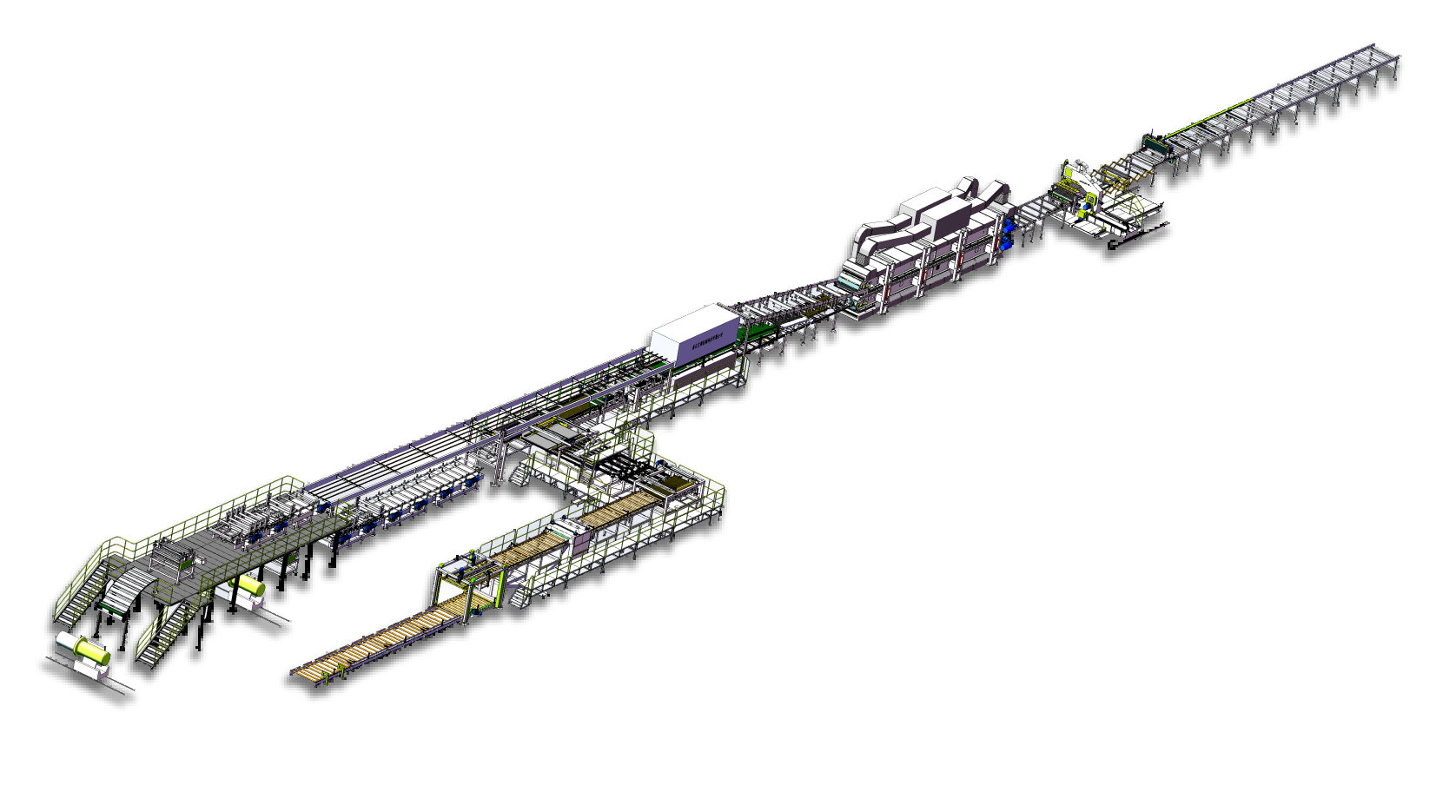
Every stage of our production line is designed with precision engineering that eliminates variation before it starts. From automated ingredient dosing to real-time temperature controls, we’ve built safeguards that catch deviations the moment they occur. It’s not just machinery—it’s a closed-loop system where feedback from one process instantly adjusts the next, so each product matches the last in weight, texture, and appearance.
Our quality checks are embedded into the line, not tacked on at the end. High-speed cameras, laser measurements, and moisture analyzers scan every single unit, flagging anything outside our narrow tolerance bands. Operators receive live alerts and can trace issues back to their source in seconds, which means corrections happen while the batch is still running—not after thousands of units are already packed.
This integration of technology and process knowledge lets us deliver that identical taste, mouthfeel, and pack integrity run after run. The line doesn’t just repeat a recipe; it adapts to tiny shifts in raw materials or environmental conditions without missing a beat. Customers might not see these measures, but they notice the result: a product they can rely on, every single time.
Streamlined Production from Start to Finish
Our approach strips away unnecessary complexity, allowing ideas to flow from concept to completion without friction. Every step, from initial sketches to final polish, is handled under one roof, minimizing handoffs and keeping momentum alive. This integrated process ensures that nothing gets lost in translation, and the original vision stays intact throughout the journey.
We’ve designed a workflow where creativity and execution happen simultaneously, not sequentially. Designers and makers sit side by side, refining details in real time and solving problems before they escalate. It’s a constant dialogue between imagination and practicality, resulting in a final product that feels both inspired and impeccably crafted.
By keeping production entirely in-house, we maintain a tight feedback loop that traditional fragmented methods just can’t replicate. There are no delays waiting for external approvals or sifting through misaligned revisions. Instead, every adjustment is immediate, every iteration builds directly on the last, and the path from start to finish is as direct as it is deliberate.
Innovations Shaping Modern Polyurethane Processing
The landscape of polyurethane processing has evolved far beyond simple mixing and pouring. Today, we see a surge in reactive injection molding techniques that allow for intricate part geometries while slashing cycle times. These systems often integrate real-time viscosity monitoring, ensuring consistent material flow and reducing scrap rates significantly.
Another quiet revolution is happening in the realm of bio-based polyols. Formulators are increasingly turning to renewable feedstocks—like soybean oil or lignin—without compromising performance. This shift is not just about sustainability checkboxes; it's yielding foams and elastomers with unique property profiles that open up new applications in automotive and construction.
Digitalization is also leaving its mark. Sensor-laden molds and machine learning algorithms now predict curing behavior, adjusting process parameters on the fly. This marriage of data and chemistry might sound complex, but the outcome is refreshingly simple: higher throughput, less waste, and parts that meet tight specifications from the first shot.
Tailored Solutions for Unique Production Demands
Every production line carries its own story, shaped by distinct challenges and goals. Off-the-shelf approaches often fall short when confronted with the subtle complexities of specific workflows. That's why we start by listening—really listening—to the rhythm of your operations, uncovering the bottlenecks and opportunities that only those on the ground truly understand.
From there, we craft solutions that fit like a glove, whether it means reengineering a single component or designing an entirely new process. Our team combines deep technical expertise with a flexible mindset, ensuring that each recommendation is rooted in practicality, not just theory. It's about making your machinery and methods work better together, without forcing you to adapt to us.
The results speak for themselves: smoother throughput, reduced waste, and a system that evolves as you do. We don't believe in one-size-fits-all; we believe in making the solution so seamlessly suited to your needs that it feels like it was always there.
Behind the Scenes: Our Approach to Operational Excellence
At the core of our daily rhythm lies a set of quiet disciplines most people never get to see. It’s not about flashy tools or rigid protocols — it’s the constant, almost invisible calibration that happens when a team genuinely cares about getting the small things right. Morning stand-ups, for instance, aren’t just status updates. They’re a practice in shared attention, where we surface friction points before they grow into blockers, and where a quick “I’ll pick that up” often saves hours downstream.
What makes our operations feel different isn’t a single breakthrough; it’s the accumulation of tiny improvements that each of us owns. When a process starts to feel heavy, someone will ask, “What if we tried it this way instead?” That question, asked without ego, has reshaped entire workflows. We keep lightweight playbooks that are never final — they’re living documents scribbled with notes, crossed-out steps, and the occasional joke left by a teammate who found a clever shortcut.
And then there’s the invisible glue: the way we hand off tasks. You won’t find it in any manual. It’s in the brief Loom video that anticipates your next question, or the one-line Slack message that simply says, “Hey, I already prepped the data you’ll need.” This isn’t about going above and beyond; it’s just how we work. The result is a kind of operational flow that feels almost boring in its smoothness — and that’s exactly the point.
FAQ
A polyurethane production line is a fully integrated system that combines raw material handling, metering, mixing, and dispensing units to produce polyurethane products. It typically includes storage tanks, high-precision pumps, mix heads, conveyor systems, and control panels designed for continuous or batch production.
Chinese manufacturers have gained a strong reputation for delivering robust and cost-effective solutions without compromising on quality. They leverage advanced automation, local supply chains, and experienced engineering to offer competitive pricing and reliable after-sales support, making them an attractive option globally.
Quality is ensured through precision engineering, such as computer-controlled metering of isocyanate and polyol components, temperature regulation, and real-time monitoring. Many lines incorporate in-line quality checks and automated feedback systems to correct any deviations immediately, minimizing waste and defects.
Absolutely. Modern lines are designed with flexibility in mind. They can switch between rigid foam, flexible foam, elastomers, and coatings with minimal downtime. Quick-change mix heads and programmable recipes allow for diverse product outputs on the same equipment.
Automation is at the heart of efficiency gains. From automatic raw material feeding to robotic dispensing and curing, it reduces manual labor, speeds up cycle times, and increases repeatability. Advanced PLC systems with IoT connectivity even allow for remote monitoring and predictive maintenance.
Energy efficiency is a key design focus. Many Chinese lines feature variable frequency drives on motors, optimized heating and cooling systems, and insulation to reduce power consumption. Some also recover heat from exothermic reactions, cutting overall energy use by up to 20-30% compared to older models.
Buyers typically receive comprehensive support including installation supervision, operator training, and readily available spare parts. Many Chinese companies offer extended warranties and have overseas service teams or local partners to provide prompt technical assistance.
Yes, customization is a standard offering. Manufacturers work closely with clients to design a line that fits their available space, production capacity, and specific process requirements. Modular designs allow for future expansions or reconfigurations as business needs evolve.
Conclusion
In China's polyurethane industry, the shift toward end-to-end manufacturing precision has redefined what it means to deliver both quality and speed. Our production lines are built on a foundation of engineered accuracy—every mixer, metering unit, and curing station is calibrated to maintain tight tolerances across high-volume runs. This rigor translates directly into consistent product output, from foam cushioning to rigid insulation panels. By integrating real-time monitoring and closed-loop controls, the system flags deviations before they affect the batch, ensuring each slab or molded part meets physical property targets without manual intervention. The result is a workflow where raw chemical inputs move seamlessly through preheating, high-pressure impingement, and controlled expansion, emerging as finished goods with minimal waste and cycle-time fluctuation.
Beyond baseline reliability, modern lines incorporate modular designs that adapt to client-specific formulations. Whether a factory needs flame-retardant rigid foams, high-resilience flexible blocks, or low-viscosity coatings, the machine configuration can be rapidly adjusted—mixing head selection, pour pattern programming, and temperature profiling all flex to match the chemistry. Behind these capabilities stands an operational philosophy rooted in preventive diagnostics and continuous improvement. Technicians use IoT dashboards to analyze throughput trends and schedule maintenance during natural downtime, while decentralized control cabinets keep local decision-making swift. This blend of adaptability and data-driven upkeep ensures that Chinese production facilities not only hit today’s output targets but also evolve alongside the global polyurethane market’s shifting technical demands.
Contact Us
Contact Person: Sophia Jiang
Email: [email protected]
Tel/WhatsApp: +86 17367381818
Website: https://yzwelding.com/