

Rogowski Coil Current Transformers: Top 10 Choices for Precision Monitoring
2026-08-10
Precision monitoring demands the right tools, and Rogowski coil current transformers have become the go-to solution for accurate, non-intrusive current measurement. Whether you're balancing power grids or optimizing industrial systems, the right choice can transform your data. In this post, we explore the top 10 Rogowski coil current transformers that combine innovation with reliability, including standout offerings from Xiasen, whose designs push the boundaries of performance. Dive in to discover which model fits your monitoring needs and why leading engineers trust these flexible, high-bandwidth sensors over traditional methods.
Understanding Rogowski Coil CTs and Their Role in Precision Monitoring
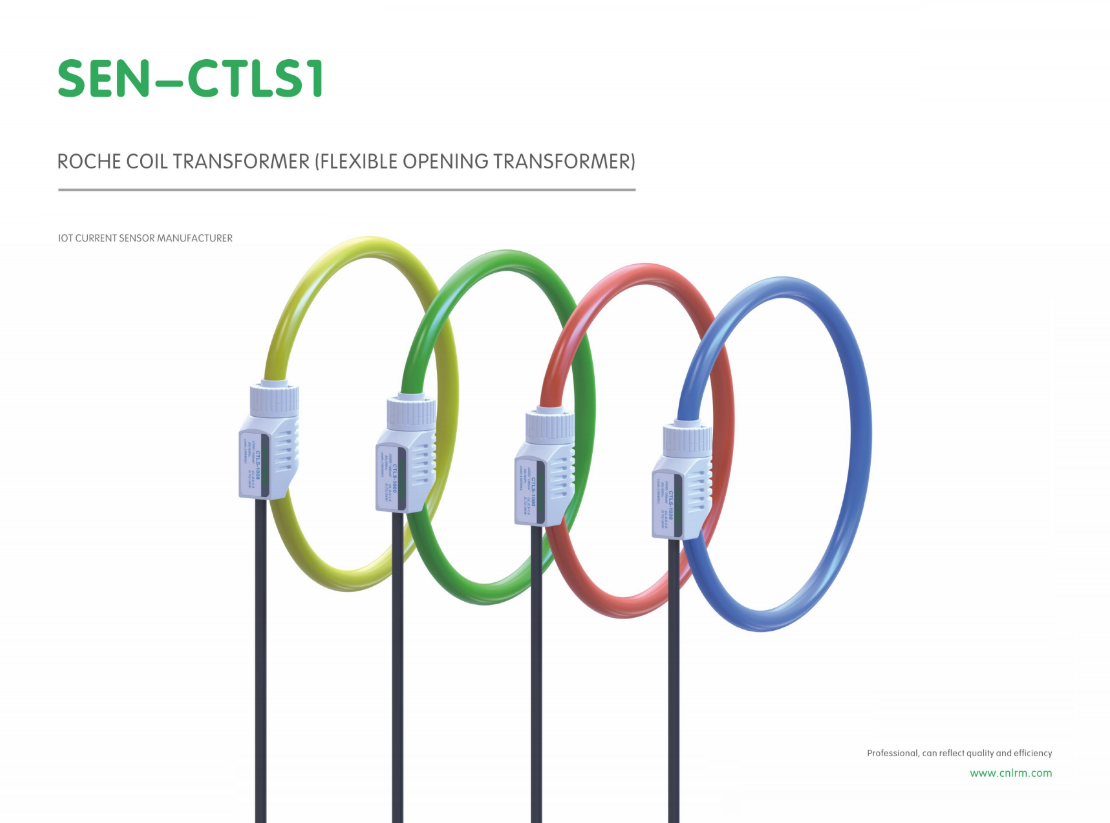
Rogowski coil current transformers break away from traditional iron-core designs by using an air-cored, toroidal winding that inherently avoids magnetic saturation. This coreless structure captures the magnetic field generated by a current-carrying conductor, producing an output voltage proportional to the rate of change of current rather than the current magnitude. As a result, they offer an exceptionally linear response across an extremely wide current range, from milliamps to hundreds of kiloamps, without the distortion caused by core saturation in conventional CTs. Their galvanic isolation and low-impedance output make them intrinsically safe for high-voltage environments, while the flexible and split-core versions simplify retrofitting onto existing busbars or large conductors without dismantling circuits.
In precision monitoring scenarios, Rogowski coils excel at capturing transient events and harmonic content that would otherwise be smoothed over or clipped by iron-core counterparts. The lack of a ferromagnetic core means no residual magnetism or hysteresis, enabling faithful reproduction of fast-switching waveforms in applications such as power quality analysis, partial discharge detection, and inverter-driven motor drives. Their wide bandwidth—often spanning from a few hertz into the megahertz range—allows engineers to scrutinize high-frequency noise or inrush currents that hint at insulation degradation or impending equipment failure. When paired with modern integrators or digital signal processors, the raw di/dt output is mathematically integrated in real time, yielding a precise current waveform devoid of phase lag or thermal drift issues common in shunt-based measurements.
The adaptability of Rogowski coil CTs carries them beyond lab settings into demanding field deployments like smart grid monitoring, medium-voltage switchgear, and railway traction systems. Their ultralight weight and compact profile enable non-invasive installation in tight spaces, while the absence of iron losses translates to negligible power consumption and no heating at the measurement point. In distributed energy resources and microgrids, where bidirectional power flows and fluctuating loads challenge measurement accuracy, these coils maintain consistent performance without periodic recalibration—their air core essentially has zero aging effects. By delivering clean, isolated, and scalable signals that interface directly with modern data acquisition platforms, they support the kind of continuous, high-resolution monitoring required for predictive maintenance algorithms and real-time decision-making in a rapidly electrifying world.
Key Performance Attributes That Set These Coils Apart
Every aspect of our coil construction targets tighter temperature uniformity. Instead of relying on generic wound elements, we've engineered a custom wire profile that seats more deeply into the coil body, pulling heat away from the element faster and bleeding it into the load with minimal overshoot. The result is a repeatable ±2°F band across the entire working zone—even during rapid ramp-ups—which lets you run thinner-gauge materials without hot spots or warping.
The insulation system is what really stretches service intervals. We took a layered approach: an inner refractory wrap that flexes with thermal cycling, a middle barrier of microporous silica that knocks radiant losses down to a fraction, and an outer hard shell that shrugs off splashes and casual contact. Together they keep the outside shell cool enough to touch at full power and prevent moisture ingress that typically creeps into standard designs, so you're swapping coils far less often.
Longevity also comes down to how the terminals handle transient loading. Most failures start where the lead-out connects to the element, so we decoupled that joint from mechanical vibration and thermal expansion with a floating, gas-tight crimp buried inside the cold section. Combined with an oxidized surface treatment that resists spalling and carbon pickup, the typical hotspot that forms near the connection point simply never develops. You get full-rated life even in carbon-rich atmospheres that eat ordinary coils in months.
How Flexibility Opens Doors to Challenging Installations
When rigid solutions hit a wall, flexibility rewrites the playbook. It starts with the mindset that constraints aren't barriers but hidden pathways. A system that bends without breaking lets installers thread equipment through tight spaces, around awkward corners, or up against stubborn structures that would stop a conventional setup cold. This isn't about compromise—it's about discovering fresh angles and leveraging modularity to turn a headache site into a showcase of problem-solving.
Practically, that means components designed to pivot, extend, or slim down on the fly. Think cabling that can make a sharp radius without signal loss, mounting brackets with a dozen possible orientations, or telescoping frames that adapt right in the field. The real magic surfaces when the team stops fighting the environment and starts working with it—letting adjustable parts absorb irregularities, or running pathways through zones no one initially considered. Suddenly, an installation that seemed impossible becomes a testament to creative engineering.
Beyond just getting the job done, this approach builds a quiet advantage. Every tricky install hones a team's instinct for unconventional fixes, turning them into go-to experts when standard solutions flop. The flexibility that once felt like a contingency becomes a signature—proof that difficulty doesn't block progress, it refines it.
Wide Bandwidth and Linearity for Complex Waveforms
Handling today’s intricate signal environments demands more than just raw frequency range. True wide bandwidth ensures that the entire spectrum of a complex waveform is captured without truncation, preserving the fast rise times and harmonic details that define modern radar pulses and communication bursts. Without it, critical signal edges soften, and modulation fidelity collapses.
Linearity becomes the silent gatekeeper when multiple carriers or dense spectral content share the same path. Even subtle nonlinearities create intermodulation products that can mask weak signals or generate false targets. A design that maintains exceptional linearity across its full bandwidth lets you trust that what you see on the display is an accurate picture of the electromagnetic environment, not an artifact of the receiver itself.
The real engineering feat lies in achieving both simultaneously under dynamic conditions. It’s about preserving phase coherence and amplitude accuracy when the input swings from a whisper to a shout in microseconds. This balance unlocks confident analysis of agile waveforms, where every decibel of spurious-free dynamic range counts, and the integrity of the measurement chain directly impacts mission success.
Minimizing Interference in Harsh Electrical Environments
Electrical noise lurks in every industrial corner, from humming motor drives to crackling welders. In these settings, even a momentary spike can corrupt sensor readings or shut down a controller mid-process. The first line of defense often lies in how cabling is routed—keeping signal lines far from power conduits and using twisted pairs to cancel electromagnetic fields. But physical separation alone rarely solves the problem when interference covers broad frequency bands.
Shielding and grounding demand more than just connecting a wire to a metal stake. Enclosures, cable screens, and connector backshells must form a continuous Faraday cage around susceptible circuits, with no gaps that act as slot antennas. A single-point ground might prevent low-frequency hum, yet at higher frequencies a mesh of multiple bonds often works better. Selecting ferrite beads, common-mode chokes, and differential signaling also shifts the noise immunity profile, sometimes eliminating the need for heavy filtering at the power entry.
Real-world success comes from treating EMI hardening as a design philosophy rather than an afterthought. Engineers who map interference paths during board layout—keeping return loops tiny and avoiding splits in ground planes—vastly reduce post-deployment headaches. Adding redundant signal conditioning and digital filtering in firmware provides a safety net, but good analog practices upfront pay the largest dividends. In harsh environments, perfection isn't about chasing zero noise; it's about ensuring the system never trusts a single measurement without validation.
Practical Selection Tips for Long-Term Reliability
When evaluating a product for long-term use, go beyond brand reputation and scrutinize the build materials. Look for stainless steel, reinforced polymers, or anodized aluminum over flimsy plastics. Check seams, joints, and moving parts—these are the first points of failure. A simple hands-on inspection can reveal a lot: does it feel sturdy, or do parts wiggle? Weight often correlates with durability, but don’t be fooled by dead weight; it should come from quality components, not just added bulk.
Maintenance accessibility is another key indicator. Products designed with user-serviceable parts—like replaceable batteries, filters, or seals—tend to outlast sealed units. Ask yourself: can you easily clean essential components? Are replacement parts reasonably priced and readily available? A reliable product shouldn’t become a throwaway item because a minor part failed. Check online forums and user reviews specifically for mentions of repairability and part availability over time.
Finally, consider the company’s track record for keeping older models in service. Do they release firmware updates after the warranty expires? Are service manuals available to the public? A manufacturer that supports its products years after sale shows confidence in their longevity. Don’t be swayed by flashy features alone—a simpler, well-documented device is often a safer bet for years of trouble-free use.
FAQ
Their air-core design eliminates saturation, provides wide bandwidth, and delivers high linearity, ensuring accurate measurements even with distorted waveforms.
Unlike iron-core CTs, Rogowski coils do not use a magnetic core, so they don't saturate, are lightweight, and can measure both AC and high-frequency currents over a wide dynamic range.
Important factors include coil sensitivity, frequency response, accuracy class, environmental durability, and compatibility with your measurement system or integrator.
Yes, their low inductance and non-magnetic design allow them to accurately capture fast current transients and harmonics, making them ideal for power converter testing.
Their split-core and flexible form factor allow easy installation around conductors without disconnecting circuits, reducing downtime in tight spaces.
Temperature changes can affect the mutual inductance, but advanced designs with compensation techniques or high-quality materials maintain accuracy over a wide temperature range.
Top-tier models often achieve accuracy classes of 0.5 or better, with excellent linearity across a broad current range from milliamps to mega-amps.
Yes, because they are inherently isolated and have no direct electrical connection to the primary conductor, providing galvanic isolation and enhanced operator safety.
Conclusion
When it comes to capturing fast-changing currents with uncompromising accuracy, Rogowski coil current transformers have carved out a distinctive niche. Their air-core design sidesteps magnetic saturation, delivering a linear response over an extraordinarily wide frequency range—something traditional iron-core CTs simply cannot match. This inherent linearity, paired with bandwidths that routinely span from a few hertz to hundreds of kilohertz, makes them indispensable for tracking complex waveforms in power quality analysis, harmonic studies, and transient event capture. Equally compelling is their immunity to electromagnetic interference: advanced shielding and twisted-pair construction keep noise at bay even in substations humming with high-voltage activity. The result is a sensing technology that remains unflappable in harsh electrical environments, offering forensic-level clarity for precision monitoring tasks that demand both speed and fidelity.
Beyond raw performance, practical considerations tilt the field further in favor of Rogowski coils. Their slim, flexible build slips effortlessly around busbars and cables in retrofits where space is a premium—think crowded motor control centers or legacy switchgear crammed with decades of add-ons. Installation often requires no system shutdown, a quiet advantage that operations teams prize. Long-term reliability, however, hinges on material choices and mechanical integrity; selecting models with robust locking mechanisms and high-grade silicone jackets ensures stability across temperature swings and vibration. Equally critical is a coil’s immunity to stray magnetic fields, which can be validated through careful manufacturer testing data. By weighing these attributes alongside ease of integration and life-cycle durability, engineers can identify top-performing options that deliver repeatable precision year after year, turning what was once a niche instrument into a mainstream workhorse for modern power monitoring.
Contact Us
Contact Person: Liu Mengyang
Email: [email protected]
Tel/WhatsApp: 8618727589233
Website: https://www.cnlrm.com/en/