

Substantial LV Switchgear: Key Factors in Modern Electrical Infrastructure Design
2026-07-22
In today's rapidly evolving electrical landscape, substantial low-voltage (LV) switchgear stands as the backbone of reliable power distribution. From ensuring operational safety to optimizing energy efficiency, its design profoundly impacts modern infrastructure. As industries push for smarter, more resilient systems, understanding the key factors behind LV switchgear selection becomes critical. At Chang Song, we recognize that every project demands a tailored approach—balancing performance, compliance, and future scalability. This blog delves into the essential considerations shaping LV switchgear design, helping you navigate the complexities with confidence.
Defining Modern LV Switchgear: More Than Just a Panel
Walk into any commercial building or industrial facility and you'll find low-voltage switchgear quietly doing its job—but reducing it to a mere enclosure of circuit breakers misses the point entirely. Modern LV switchgear integrates protection, control, and communication in a way that transforms it into the nerve center of a facility's electrical distribution. It's no longer just about isolating faults; it's about anticipating them, maximizing uptime, and adapting to the shifting demands of today's power-hungry environments.
What sets contemporary designs apart is how they balance physical robustness with digital intelligence. Traditional panel construction focused on withstanding short circuits and managing heat, but the latest systems embed sensors and connectivity that feed real-time data upstream. This means a facility team can monitor load trends, track equipment health, and even perform remote diagnostics without standing in front of the gear. The panel itself becomes a node in a larger energy ecosystem, shedding the passive role it played for decades.
Underneath the sleek enclosures, you'll find that selectivity and arc-flash mitigation have evolved beyond basic coordination tables. Advanced circuit breakers now use microprocessor-based trip units that can distinguish between a momentary inrush and a genuine overload, while arc-resistant constructions channel dangerous gases away from personnel. It's a level of protection that shifts the conversation from simple code compliance toward actual operational safety and continuity. In short, modern LV switchgear is designed not just to contain power, but to harness it intelligently.
Safety First: Arc Flash Mitigation and Personnel Protection
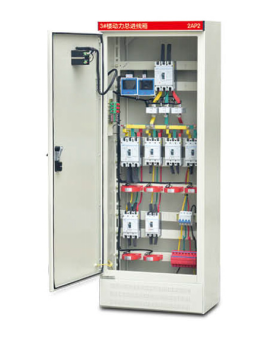
Arc flash incidents can release massive amounts of energy in a split second, causing severe burns, hearing damage, and even fatal injuries. The real challenge is that these hazards often go unnoticed until an accident forces a painful lesson. Effective mitigation isn't just about checking compliance boxes—it requires a thorough understanding of your electrical infrastructure and a proactive mindset. From accurate labeling of equipment to implementing engineering controls like current-limiting fuses, every detail matters. It's about embedding safety into daily operations, not treating it as an afterthought.
Personal protective equipment is a critical line of defense, but it's only as reliable as the training behind it. Workers need to know more than which gloves or face shields to wear; they must understand the specific hazard levels they might encounter and how to react if something goes wrong. Regular, scenario-based drills can transform theoretical knowledge into instinctive responses. Moreover, fostering an environment where people feel comfortable raising concerns about potential arc flash risks creates a culture where safety truly comes first.
Technology has opened new doors for minimizing arc flash exposure without compromising operational efficiency. Remote racking devices, arc-resistant switchgear, and predictive maintenance tools help keep personnel at a safe distance while still getting the job done. Pairing these advancements with a rigorous incident energy analysis ensures that protection strategies align with actual site conditions, not outdated assumptions. Ultimately, safeguarding your team demands a blend of smart engineering, practical training, and a relentless commitment to staying ahead of the risks.
Compact by Design: Space Optimization in Urban Installations
Urban spaces are increasingly squeezed, demanding installations that do more with less. Compact design isn’t just about shrinking dimensions; it’s a thoughtful approach that layers function into every square inch. A well-designed urban installation might serve as seating, a planter, and a lighting element simultaneously, turning a narrow alley into a vibrant communal node. The key lies in understanding how people move and linger, then sculpting forms that guide interactions without cluttering the landscape.
Materials play a pivotal role in this spatial puzzle. Think of perforated metal that offers visual lightness while maintaining structural integrity, or translucent panels that borrow light and views to expand perceived space. By using modular elements that can be reconfigured, installations adapt to shifting needs—a market stall by morning, a performance stage by evening. This adaptability ensures that even the most constrained site remains dynamic and relevant over time, challenging the notion that small means static.
Beyond physical dimensions, compact design fosters a sense of intimacy and discovery. When every element is intentional, unnecessary visual noise fades away, letting the installation blend with its surroundings or stand out as a deliberate focal point. It’s about creating moments where the city feels personal—a tucked-away bench enveloped by greenery, or a sculptural drinking fountain that transforms a routine act into a brief escape. In this way, optimization isn’t a compromise; it’s a strategy that amplifies the urban experience, proving that the most memorable spaces often come in the smallest packages.
Smart Integration: The Role of Digital Monitoring and IoT
The convergence of digital monitoring and the Internet of Things has quietly reshaped how industries operate, moving beyond simple data collection into a realm where every sensor becomes a decision-making node. On factory floors, vibration and temperature sensors feed real-time streams into analytics platforms, allowing maintenance teams to preempt failures before they cascade into costly downtime. This isn’t about generating dashboards, it’s about creating a nervous system for assets, where patterns are learned and anomalies trigger automated responses without human intervention.
What makes this integration truly smart is the shift from reactive to predictive workflows. In agriculture, soil moisture monitors and weather stations communicate directly with irrigation controllers, adjusting water delivery based on plant needs and forecast data. The result is a closed-loop system that optimizes resource use while boosting yields, a balance that was nearly impossible when each component operated in isolation. The magic lies in the middleware that translates raw signals into actionable commands, often at the edge, reducing latency and dependence on cloud connectivity.
Looking beyond operational efficiency, the role of these technologies extends into quality of life improvements in smart buildings. Occupancy sensors and CO2 monitors work in tandem with HVAC systems to maintain comfort while slashing energy waste. Rather than following rigid schedules, the environment adapts to human presence and activity, learning over time to anticipate needs. This harmonious blend of monitoring and IoT doesn’t just cut costs, it creates spaces that feel intuitively responsive, proving that the smartest integrations are those that fade into the background.
Sustainability Matters: Energy Efficiency and Eco-Friendly Materials
Cutting energy consumption starts with the design itself. By integrating passive solar strategies, high-performance insulation, and airtight construction, buildings can slash heating and cooling demands dramatically. Pairing these with energy-efficient appliances and LED lighting further trims operational energy use, while on-site renewables like solar panels or heat pumps can cover remaining needs, pushing the project toward net-zero performance. The result is a space that stays comfortable year-round without guzzling resources.
Material choices carry deep ecological weight. Opting for reclaimed wood, recycled steel, or low-carbon concrete reduces the embodied energy locked into the structure. Rapidly renewable resources like bamboo and cork offer durable alternatives to traditional hardwoods, while finishes free from volatile organic compounds (VOCs) protect indoor air quality. Every selection ripples outward—supporting responsible supply chains and lowering the building’s overall environmental toll.
True sustainability emerges when energy and materials work in tandem. A super-insulated envelope wrapped in reclaimed brick, for instance, marries thermal efficiency with circular economy principles. Thoughtful sourcing of local, non-toxic materials shrinks transportation emissions and fosters healthier interiors. In practice, this holistic approach doesn’t just meet green certifications; it creates resilient, future-proof spaces that nurture both people and planet without compromising on aesthetics or function.
Future-Proofing Infrastructure: Scalability and Maintenance Ease
Designing systems that stand the test of time requires a blend of forward-thinking architecture and pragmatic engineering. Instead of chasing every new trend, we anchor our solutions in modular patterns that allow components to be swapped or scaled independently. This means when traffic surges unexpectedly, the system gracefully expands without needing a full rewrite—just add more instances where the bottlenecks form. We lean heavily on infrastructure-as-code, so every piece of the stack is documented as executable blueprints, turning what used to be tribal knowledge into repeatable, version-controlled deployments. The result is a foundation that feels almost alive, adapting to growth while keeping operational overhead in check.
Maintenance ease often gets treated as an afterthought, but we've found it's what separates frantic fire drills from calm, predictable operations. By baking observability into each service—logs, metrics, traces—we make the system's inner workings visible, so teams can diagnose issues without playing twenty questions with the terminal. Upgrades become boring rather than nerve-wracking because we invest early in zero-downtime deployment strategies and thorough rollback playbooks. Even the database schema migrations are designed to be additive and reversible, sidestepping the terror of a 3 a.m. outage. When the infrastructure is this intelligible, bringing on new engineers is no longer a months-long initiation; they can navigate the codebase and contribute meaningfully within days.
Perhaps the most undervalued aspect of future-proofing is how it shapes team culture. A well-structured, maintainable infrastructure invites curiosity instead of fear—developers are more willing to experiment and refactor when they trust the safety nets around them. We avoid tight coupling to specific vendors or ephemeral APIs by wrapping third-party integrations in adapters that shield our core logic from external shifts. It's a deliberate bet on simplicity over cleverness, recognizing that the real cost of software is the time spent understanding and altering it over years, not the initial build. In this light, scalability isn't just about handling more users—it's about making sure the system remains hospitable to the people who maintain it, long after the original authors have moved on.
FAQ
Substantial LV switchgear serves as the backbone of power distribution in buildings and industrial facilities, ensuring safe and reliable delivery of electricity to various loads while protecting against faults.
Rating selection involves analyzing the total connected load, diversity factors, and future expansion needs, along with compliance to standards like IEC 61439. The rated current, short-circuit withstand, and operational voltage are core parameters.
Fixed, withdrawable, and modular constructions are common. Withdrawable units offer easier maintenance, while fixed designs are cost‑effective. The choice depends on operational downtime tolerance and space constraints.
Arc flash incidents release intense energy, causing severe injuries and equipment damage. Designing with arc‑resistant compartments, pressure relief ducts, and fast‑acting protective devices minimizes this risk.
Integrated sensors and communication modules provide real‑time data on temperature, current, and switch status, enabling predictive maintenance, energy optimization, and remote troubleshooting, reducing downtime.
Enclosure IP ratings, anti‑corrosion coatings, and ventilation filters become crucial. In coastal or dusty areas, additional measures like space heaters and sealed cable entries prevent degradation.
By setting upstream and downstream breakers to trip in a coordinated sequence, only the faulted circuit is isolated. This prevents unnecessary blackouts and simplifies fault location.
Manufacturers are using recyclable materials, designing for energy efficiency, and reducing SF6 gas usage. RoHS compliance and end‑of‑life disassembly plans are becoming standard requirements.
Conclusion
Modern LV switchgear has evolved far beyond simple panel enclosures, emerging as a cornerstone of robust electrical infrastructure. Today’s designs must reconcile the growing demand for stringent arc flash mitigation and personnel safety with the reality of shrinking equipment footprints in dense urban environments. Manufacturers now integrate advanced protective relaying, finger-safe busbar systems, and arc-resistant constructions that not only contain incident energy but actively reduce it, making compliance with evolving codes a design priority. This focus on intrinsic safety coexists with the push for compactness: through clever compartmentalization, optimized thermal management, and the use of high-strength insulating materials, switchgear now delivers higher power density without sacrificing accessibility for routine inspections or cable terminations. These dual imperatives—safety and space efficiency—form the foundation of substantial LV switchgear, ensuring reliable operation even in the most constrained industrial and commercial settings.
Beyond the hardware, the intelligence embedded within modern switchgear marks a decisive leap forward. Digital monitoring and IoT connectivity transform static distribution boards into proactive energy management hubs, enabling real-time tracking of loads, thermal conditions, and energy consumption with granular precision. This smart integration not only supports predictive maintenance—slashing downtime by identifying issues before they escalate—but also underpins sustainability goals. Engineers now specify switchgear with eco-friendly materials, reduced copper usage, and design-for-recyclability, while energy-efficient components and real-time power quality analytics help facilities trim carbon footprints. Moreover, future-proofing demands scalable architectures: modular busbar systems, withdrawable functional units, and plug-and-play upgrades allow installations to expand seamlessly as operational needs evolve. Maintenance ease is hardwired through front-accessible compartments and intuitive diagnostics, slashing mean time to repair. Cumulatively, these factors redefine LV switchgear as a dynamic, long-lived asset that continuously adapts to the shifting priorities of modern electrical networks.
Contact Us
Contact Person: Tonglun Chen
Email: [email protected]
Tel/WhatsApp: 8618906642555
Website: https://www.cncsele.com