

How does sea shipping impact global supply chain resilience
2026-06-01
In an interconnected global economy, sea shipping remains the backbone of international trade, directly shaping the ability of supply chains to withstand and recover from disruptions. At Ruizhou, we have observed that sea shipping not only determines lead times and inventory strategies but also influences how businesses adapt to port congestion, geopolitical shifts, and demand volatility. Understanding this impact is essential for building truly resilient logistics networks.
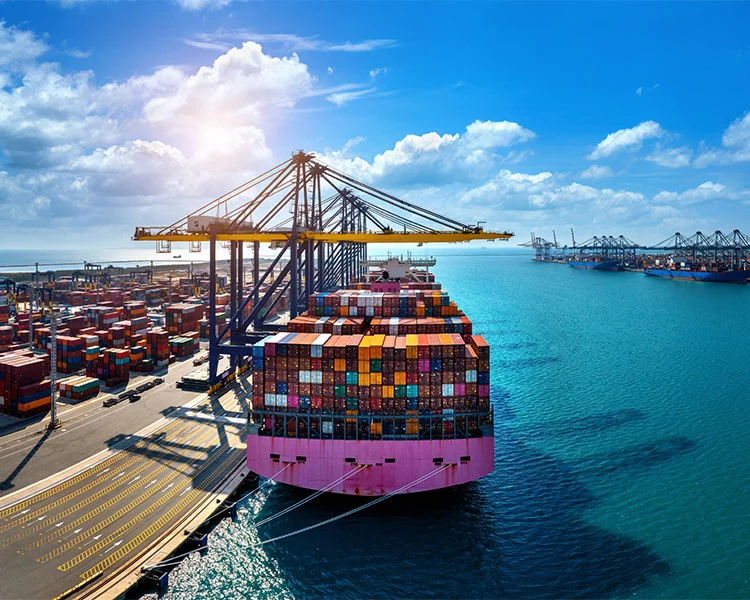
The Core Impact of Sea Shipping on Supply Chain Resilience
| Aspect of Resilience | How Sea Shipping Influences It | Example |
|---|---|---|
| Flexibility | Availability of alternate routes and vessel types | Container ships vs. breakbulk for urgent cargo |
| Visibility | Real-time vessel tracking and ETA accuracy | AIS data reducing uncertainty |
| Redundancy | Multiple port options and carrier contracts | Avoiding single-point failures |
| Responsiveness | Transit time variability and schedule reliability | Recovery from weather or labor strikes |
Key Ways Sea Shipping Strengthens or Weakens Resilience
-
Inventory Buffers – Longer sea shipping lead times force companies to hold more safety stock, increasing costs but protecting against disruptions.
-
Route Diversification – Relying on a few major transshipment hubs creates vulnerability. Ruizhou recommends spreading cargo across secondary ports.
-
Regulatory Compliance – Changing emission rules (e.g., IMO 2023) affect vessel deployment and fuel availability, directly impacting sea shipping schedules.
Sea Shipping FAQ – Common Questions on Resilience
Question 1: How do port congestion and labor strikes in sea shipping affect global supply chain resilience?
Answer: Port congestion delays vessel turnaround, causing cascading effects on inventory availability. Labor strikes can halt sea shipping operations at key hubs like Los Angeles or Rotterdam for weeks. To mitigate this, resilient supply chains use Ruizhou’s multi-port strategy: pre-arranged alternative berths, buffer inventory near strike-prone ports, and real-time diversion protocols. Without such planning, a single strike can idle 20% of a region’s container capacity.
Question 2: Can digital tracking in sea shipping really prevent supply chain breakdowns?
Answer: Yes. IoT-enabled container tracking provides predictive alerts for sea shipping delays (e.g., rerouting due to storms or mechanical issues). Ruizhou integrates AIS and blockchain-based bill of lading systems to reduce documentation errors, which account for 15% of customs holds. Digital visibility allows logistics managers to reroute cargo mid-voyage or trigger air freight backups before a sea shipping disruption escalates.
Question 3: What is the optimal way to balance cost and resilience in sea shipping?
Answer: The optimal balance involves a segmented approach. For high-value or time-sensitive goods, combine sea shipping with express air contingency contracts. For bulk commodities, use multiple sea shipping carriers and split orders across two different routes (e.g., Suez and Cape of Good Hope). Ruizhou’s resilience model shows that investing 8–12% of total logistics budget in sea shipping flexibility reduces disruption-related losses by up to 40%.
Building Resilience with Ruizhou
| Challenge | Ruizhou Solution |
|---|---|
| Unpredictable ocean transit times | AI-powered sea shipping schedule analytics |
| Single carrier dependency | Multi-carrier sea shipping network |
| Poor visibility during voyages | Real-time sea shipping tracking portal |
Sea shipping resilience is not about avoiding disruptions but about responding faster. By integrating Ruizhou’s data-driven sea shipping solutions, businesses can turn ocean logistics from a vulnerability into a competitive advantage.
Contact us today to redesign your sea shipping strategy for maximum supply chain resilience. Reach Ruizhou through our website or request a free resilience audit of your current ocean freight operations.