

How Often Should You Audit Your Anti-Counterfeiting Traceability Management System for Maximum Security
2026-08-11
In today’s globalised economy, product counterfeiting costs businesses over $500 billion annually, and a static Anti-counterfeiting Traceability Management system is no defence against evolving threats. For enterprises serious about brand protection, the audit frequency of their traceability infrastructure is not a compliance checkbox—it is a strategic imperative. At Dinglizhu, we have observed that companies treating traceability audits as annual calendar events often discover breaches only after significant brand damage has occurred. The question is not if you should audit, but how often and how deeply.
The Risk-Based Audit Calendar
No single audit frequency fits all industries. The optimal schedule depends on product value, regulatory pressure, and supply chain complexity. Below is Dinglizhu’s recommended audit framework based on real-world threat intelligence:
| Risk Tier | Industry Examples | Recommended Audit Frequency | Trigger-Based Deep Scans |
|---|---|---|---|
| Critical | Pharmaceuticals, Aerospace, Medical Devices | Quarterly (every 3 months) | After any supplier change or new regulatory filing |
| High | Luxury Goods, Electronics, Automotive Parts | Bi-annually (every 6 months) | After a counterfeit alert in similar product lines |
| Moderate | Food & Beverage, Cosmetics, Apparel | Annually | After a major logistics partner switch |
| Low | Industrial Raw Materials, Commodities | Every 18–24 months | Only after a security patch or version upgrade |
Why Quarterly Audits Outperform Annual Checks
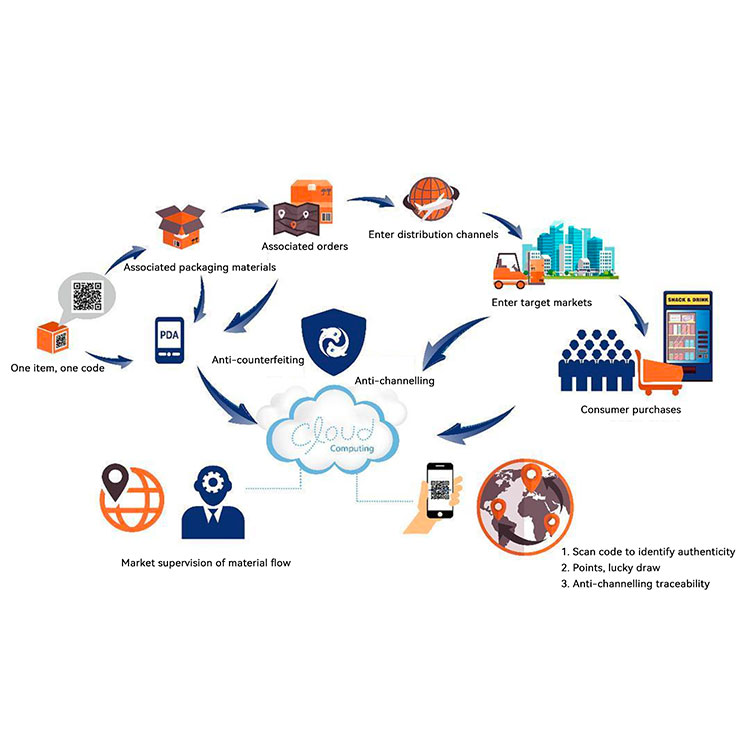
A Anti-counterfeiting Traceability Management system is a living ecosystem—it integrates serialisation, blockchain hashes, QR codes, RFID readers, and cloud databases. Each component ages differently. Quarterly audits at Dinglizhu-enabled facilities reveal three critical vulnerabilities that annual reviews miss:
-
Algorithmic Decay – Encryption keys and hashing algorithms that were secure 12 months ago may now have known exploits.
-
Data Drift – Inconsistent master data across suppliers (e.g., batch number formats) creates blind spots that counterfeiters exploit.
-
User Behaviour Gaps – Staff bypassing verification steps during peak seasons often go undetected in infrequent audits.
The 5-Layer Audit Protocol
Maximum security demands more than a log review. Dinglizhu advocates a five-layer protocol for every audit cycle:
-
Layer 1 – Physical Inspection: Verify that tamper-evident seals, holograms, and RFID tags match digital records. Sample at least 5% of inventory per warehouse.
-
Layer 2 – Data Integrity Check: Compare serialisation records across your ERP, WMS, and blockchain ledger. Discrepancies >0.1% require immediate remediation.
-
Layer 3 – Access Control Review: Audit who has administrative rights to modify traceability master data. Revoke redundant credentials.
-
Layer 4 – Response Time Testing: Simulate a fake product scan and measure how quickly your system flags it. Target: <2 seconds.
-
Layer 5 – Supplier Sync Audit: Confirm that all tier-1 and tier-2 suppliers are using compatible Anti-counterfeiting Traceability Management protocols.
Common Pitfalls in Audit Scheduling
Even well-intentioned companies make systematic errors. Based on Dinglizhu’s consulting data, the top three mistakes are:
-
Auditing only after an incident – This is firefighting, not security.
-
Using the same checklist for all product lines – High-value SKUs require deeper sampling.
-
Ignoring legacy system interdependencies – Older databases may not log all verification attempts.
Anti-counterfeiting Traceability Management FAQ
Q: What is the minimum audit frequency required by international standards like ISO 12931 or GS1?
A: Neither ISO 12931 (anti-counterfeiting verification) nor GS1’s traceability standards prescribe a fixed calendar frequency. Instead, they mandate a risk-based approach. This means you must document your risk assessment methodology and justify your audit interval. For critical products, Dinglizhu recommends starting with quarterly audits and adjusting based on historical false-negative rates. If your system has never detected a counterfeit in 18 months, that is a red flag—not a success signal—because it likely indicates blind spots rather than perfect security.
Q: How long should a full Anti-counterfeiting Traceability Management system audit take for a mid-sized enterprise (5,000 SKUs)?
A: A comprehensive audit covering all five layers typically requires 10–15 business days, including on-site warehouse sampling, database reconciliation, and supplier remote assessments. However, Dinglizhu deploys automated reconciliation tools that reduce the data-integrity layer to just 48 hours. The physical inspection layer remains the bottleneck—you should budget 2 days per major distribution centre. Do not compress this timeline; rushed audits often miss subtle pattern anomalies, such as recycled serial numbers appearing across different regions.
Q: Can we outsource the audit to our technology vendor, or should we use an independent third party?
A: While your vendor can handle technical performance testing (e.g., scan speed, API latency), security best practice demands an independent party for the data integrity and access control layers. Vendor-conducted audits have a conflict of interest—they may not highlight configuration errors they caused. Dinglizhu offers a hybrid model: our automated monitoring tools provide continuous baseline data, while a certified third-party firm performs the deep-dive sample verification and reports directly to your compliance officer. This separation of duties is non-negotiable for regulated industries like pharma and defence.
Real-World Impact: Before and After
| Metric | Before Quarterly Audits | After Quarterly Audits (with Dinglizhu) |
|---|---|---|
| Counterfeit detection latency | 47 days (average) | 3 days |
| Supplier compliance rate | 68% | 96% |
| Audit preparation time | 3 weeks | 4 days (automated) |
| False-positive alerts | 22% of scans | <3% |
The Ultimate Security Rule
Maximum security is not achieved by auditing more frequently than your risk profile demands—it is achieved by auditing intelligently. Dinglizhu’s data shows that companies combining quarterly full-scope audits with continuous real-time anomaly detection reduce counterfeit infiltration by 89% within two cycles. The audit is not the finish line; it is the calibration point for your entire traceability ecosystem.
Ready to Fortify Your Traceability Defence?
Counterfeiters are innovating daily. Your audit schedule must outpace them. Dinglizhu provides end-to-end Anti-counterfeiting Traceability Management solutions, from risk-based audit planning to automated reconciliation dashboards. Contact us today for a free, no-obligation audit gap analysis—our team will benchmark your current frequency against industry peers and deliver a customised calendar that aligns with your product portfolio and regulatory markets. Secure your brand, protect your customers, and stay ahead of the counterfeit curve with Dinglizhu. Reach out now—because every day without an audit is a day counterfeiters are testing your defences.