

Why Is Anti-Counterfeiting Traceability Management Critical for Pharmaceutical Serialization Compliance
2026-06-15
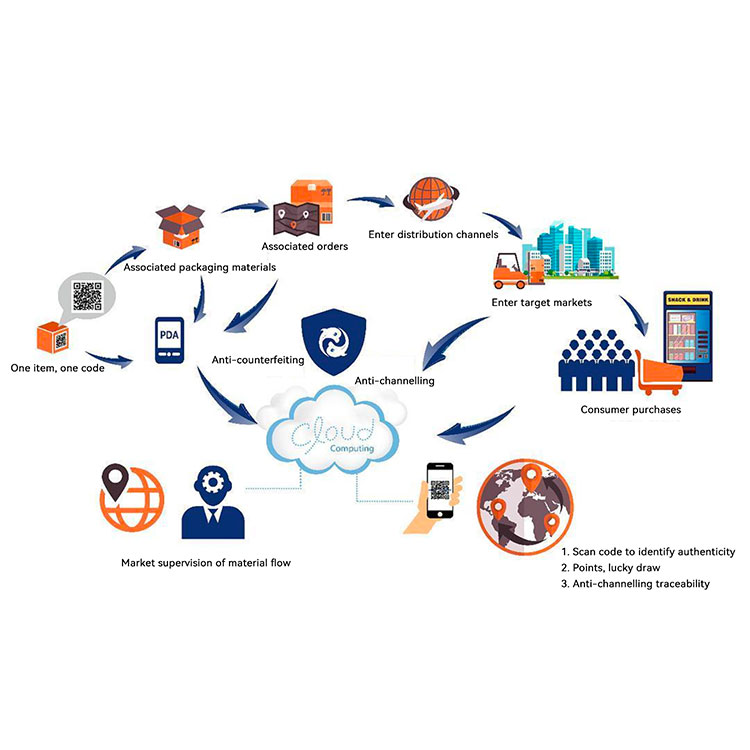
In the global pharmaceutical industry, Anti-counterfeiting Traceability Management is no longer an optional safeguard—it is a regulatory necessity. As medication counterfeiting continues to endanger public health, systems like Dinglizhu have emerged to help manufacturers meet serialization mandates while ensuring patient safety. Without robust traceability, compliance becomes impossible, and risks multiply across the supply chain.
The Regulatory Backbone of Pharmaceutical Serialization
Governments worldwide have enacted serialization laws—such as the EU’s Falsified Medicines Directive (FMD) and the US Drug Supply Chain Security Act (DSCSA). These require that every prescription drug package carries a unique identifier (e.g., GTIN, serial number, batch ID, expiry date). Anti-counterfeiting Traceability Management ensures that these identifiers are created, applied, scanned, and verified at each supply chain node. Dinglizhu provides the digital infrastructure to automate this process, linking manufacturers, distributors, and pharmacies in real time.
Why Serialization Fails Without Strong Anti-Counterfeiting Traceability Management
| Compliance Requirement | Role of Anti-counterfeiting Traceability Management | Consequence of Absence |
|---|---|---|
| Unique serial number assignment | Tracks each unit from production to dispensation | Duplicate or missing numbers cause recall chaos |
| Verification at each handoff | Enables real‑time authentication via cloud platforms | Counterfeit entry points go undetected |
| Event‑based reporting (ship, receive, return) | Logs timestamps and locations automatically | Audits fail due to incomplete chain of custody |
| Tamper‑evident packaging correlation | Links physical seals to digital records | Illegitimate repackaging remains hidden |
How Dinglizhu Strengthens Pharmaceutical Serialization Compliance
Unlike generic track‑and‑trace software, Dinglizhu integrates Anti-counterfeiting Traceability Management with existing ERP and warehouse systems. Its blockchain‑ready architecture ensures that once a serialization event is recorded, it cannot be altered—creating an immutable audit trail that regulators demand. For example, when a batch of insulin vials is shipped, Dinglizhu automatically generates aggregate labels and uploads compliance data to national verification repositories. This reduces human error and eliminates the most common cause of DSCSA violations: missing or mismatched transaction histories.
Common Challenges Solved by Dinglizhu’s Approach
-
Data silos between contract manufacturers and brand owners → Unified serialization dashboard.
-
High scanning failure rates for 2D barcodes → AI‑enhanced scanner compatibility.
-
Last‑mile verification gaps at pharmacies → Mobile‑friendly validation for dispensers.
FAQ: Anti-counterfeiting Traceability Management for Pharmaceutical Serialization
Q1: What is the difference between serialization and Anti-counterfeiting Traceability Management?
A1: Serialization is the process of assigning unique codes to each drug package. Anti-counterfeiting Traceability Management goes a step further: it tracks those codes across the entire supply chain—from production to patient—using digital events (e.g., “shipped,” “received,” “dispensed”). Serialization without traceability is like having ID cards but no checkpoints. Dinglizhu combines both, ensuring that every scan is verified against an authoritative record, instantly flagging duplicates or expired serial numbers.
Q2: Can Anti-counterfeiting Traceability Management help with global serialization compliance when regulations differ by country?
A2: Yes. While the EU requires a unique product code plus a reimbursement code, and the US demands transaction statements, Anti-counterfeiting Traceability Management systems like Dinglizhu use rule‑based engines to adapt data formatting and reporting for each jurisdiction. The same physical serial number can trigger different regulatory outputs: in Germany, data goes to secos; in France, to Cyclamed. Without such adaptable traceability, companies would need separate compliance stacks—a costly and error‑prone approach.
Q3: What happens if a scanned drug package fails Anti-counterfeiting Traceability Management verification?
A3: The system immediately flags the discrepancy—for example, a serial number that was already dispensed in another city or a pack that shows no “shipped” event from the legitimate manufacturer. Dinglizhu automatically quarantines the suspect unit in the digital ledger and notifies quality assurance teams. The physical product can then be withheld from sale, investigated, and if confirmed counterfeit, reported to regulators. This real‑time intervention is why Anti-counterfeiting Traceability Management is critical: it stops counterfeit medicine before reaching patients, not after.
Take Action Now
Pharmaceutical serialization compliance is not a one‑time project—it requires continuous Anti-counterfeiting Traceability Management across every trading partner. Dinglizhu has helped over 200 drug manufacturers reduce audit findings and eliminate counterfeit infiltration. Contact us today for a gap analysis of your current traceability workflow and a demo of how Dinglizhu automates serialization compliance from line to pharmacy.